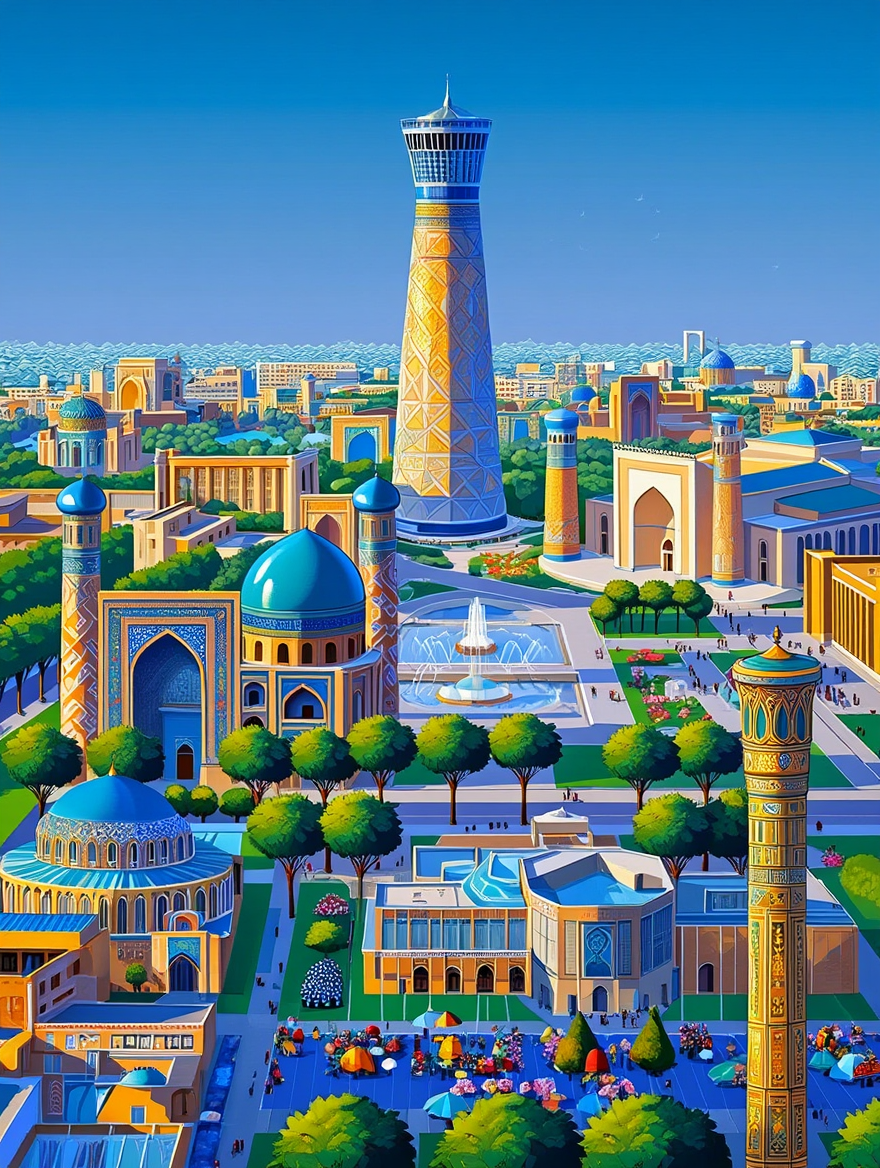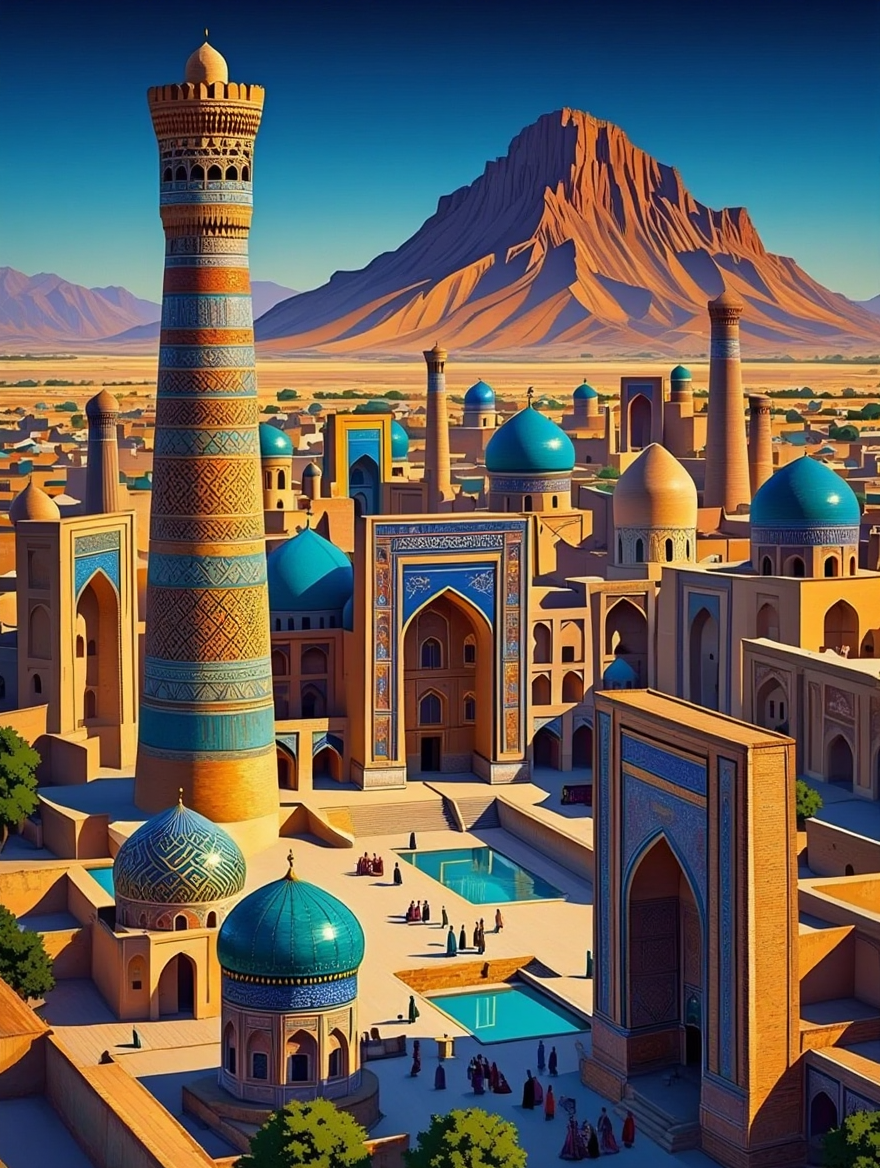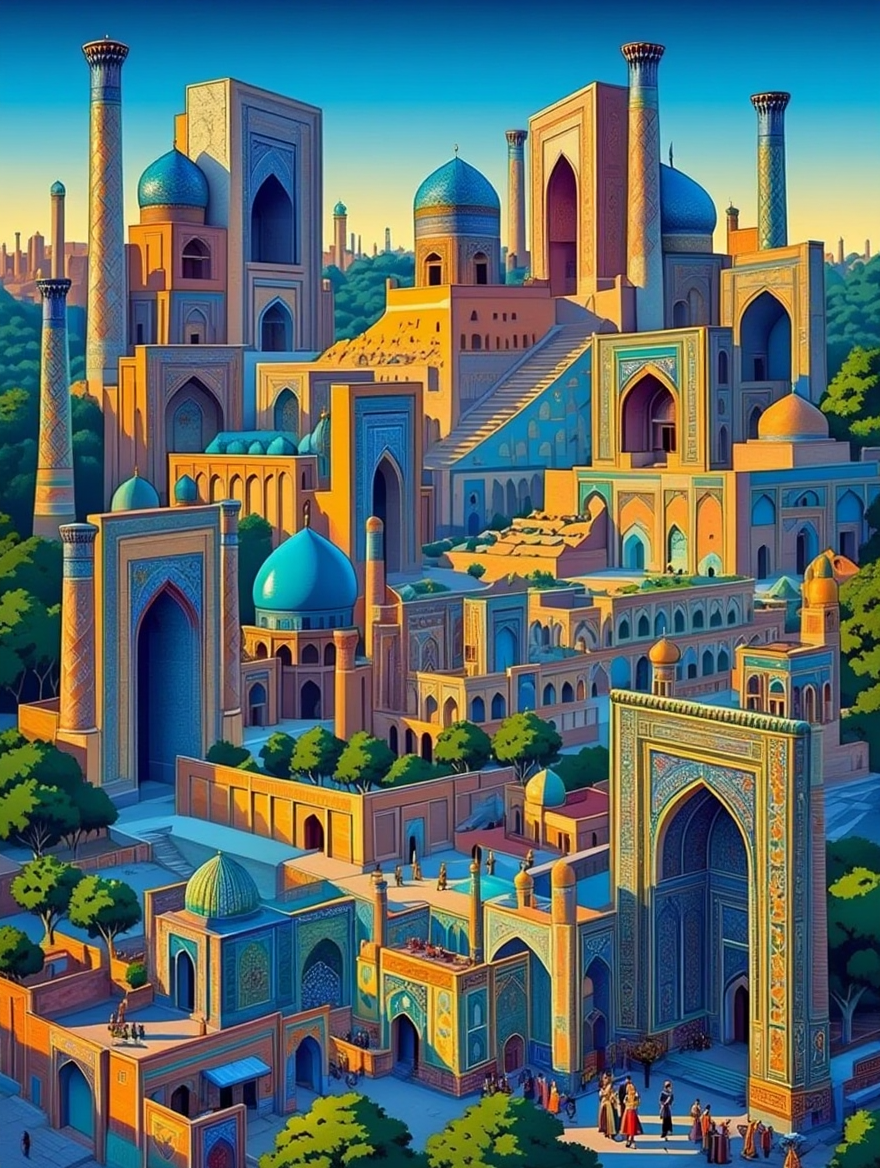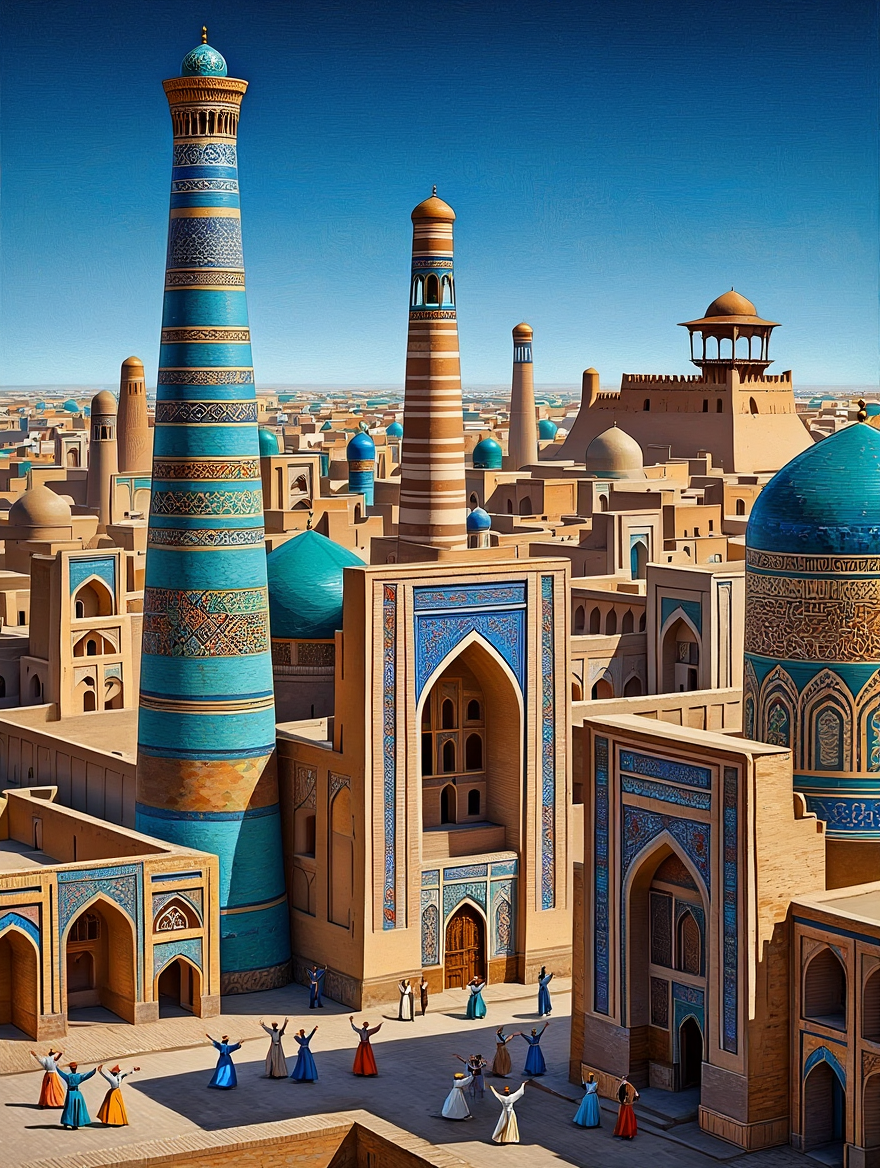

Uzbekistan is a land where time feels folded—where blue-tiled domes and minarets rise from desert plains, where caravanserais still echo the footsteps of merchants, and where ancient cities shimmer like mirages beneath Central Asia’s blazing sun. Here, history isn’t a backdrop—it’s the landscape. Every courtyard, every crumbling wall, every street lined with silk and spices tells a story older than most nations.
This is the beating heart of the Silk Road, where Samarkand, Bukhara, and Khiva once dazzled emissaries and scholars from China, Persia, India, and Rome. It is a country shaped by empires—Zoroastrian, Islamic, Timurid, Soviet—yet it has always retained its own rhythm and spirit. And now, as Uzbekistan reopens itself to the world with hospitality, vision, and newfound accessibility, travelers are discovering what locals have always known: this place is extraordinary.
Modern Uzbekistan marries legacy with lightness. Bullet trains glide past oasis cities, boutique hotels open in historic madrasahs, and saffron-scented markets buzz beside smartphone-toting youths. Yet what endures—what sets Uzbekistan apart—is its warmth. Its hospitality is not performative; it’s inherited. To visit is to be welcomed—not as a tourist, but as a guest.
Uzbekistan is not a destination that clamors for attention. It waits patiently—for the thoughtful traveler, the respectful observer, the seeker of stories. It offers color without chaos, complexity without crowds, and beauty without pretense.
With Viewpoint Horizons, you are invited not just to explore Uzbekistan—but to be shaped by it, slowly, profoundly, and with eyes wide open.
The main international gateway is Tashkent International Airport (TAS), offering direct flights from Istanbul, Dubai, Frankfurt, Moscow, Seoul, and several other major hubs. Uzbekistan Airways and flydubai operate regional routes, while growing connectivity with Central Asia and China makes overland travel possible via Kyrgyzstan, Kazakhstan, or Turkmenistan. Visa-free entry or e-visas are available for citizens of over 80 countries, making access smoother than ever.
Uzbekistan’s high-speed train network is excellent and affordable. The Afrosiyob train connects Tashkent, Samarkand, and Bukhara with comfort and speed. Slower trains and marshrutkas (shared minivans) link smaller towns. Domestic flights are useful for remote regions like Nukus or Termez. Within cities, taxis, Yandex Go, and walking are ideal. Be sure to confirm taxi prices in advance or use ride-hailing apps to avoid miscommunication.
The best seasons are spring (April–June) and autumn (September–October), when temperatures are mild and skies are clear. These shoulder months are ideal for sightseeing, photography, and cultural immersion. Summers are dry but can be extremely hot—especially in desert cities. Winters are cold, especially in the north, but often quiet and atmospheric, offering a unique glimpse into local life without crowds.
The local currency is the Uzbekistani som (UZS). While cash is king in most areas, cards are increasingly accepted in hotels, restaurants, and shops in larger cities. ATMs are available but may have withdrawal limits. Bring a currency app or calculator, as the high denominations can be confusing for new visitors.
Uzbek is the official language, written in Latin script, but Russian is widely spoken—especially among older generations. In major tourist centers, English is gaining ground among guides, hoteliers, and vendors. Basic greetings in Uzbek or Russian go a long way and are warmly received.
Samarkand is less a city than a legend. For centuries, it was the glittering prize of conquerors, from Alexander the Great to Timur the Lame. Today, it remains visually breathtaking. The Registan Square—a trio of madrasahs adorned with mosaics, stars, and Kufic calligraphy—is one of the most awe-inspiring urban spaces in the Islamic world. Visit the Shah-i-Zinda necropolis, where turquoise domes rise like a dream above sandstone tombs, or the Bibi-Khanym Mosque, built by Timur for his wife and still humming with grandeur. Samarkand is a place of symmetry, story, and stillness.
If Samarkand is imperial, Bukhara is spiritual. This city of over 2,500 years feels like a living museum of Islamic architecture and Sufi tradition. Walk through the Ark Fortress, sip tea beneath mulberry trees in Lyab-i Hauz, or explore the Kalyan Minaret, once known as the “Tower of Death” but now a symbol of Bukhara’s skyline. Bazaars hum beneath ancient domes, carpet merchants gesture you in, and courtyards echo with the clang of copper artisans. Bukhara has rhythm—slow, generous, wise.
Walled in clay and lit by desert light, Khiva is a vision from a different century. Its Ichon-Qala, the old town, is a UNESCO World Heritage Site, a compact maze of mosques, towers, madrasahs, and museums. The Kalta Minor Minaret, turquoise and unfinished, marks the city’s iconic silhouette. Unlike other cities, Khiva feels untouched. Walk the ramparts at dusk, listen to the call to prayer floating through minarets, and let the silence teach you something timeless.
Tashkent, Uzbekistan’s capital, is dynamic and multi-layered. Wide boulevards and Soviet-era concrete sprawl beside leafy parks, glitzy shopping centers, and underground stations lined with marble and mosaics. Visit the Chorsu Bazaar, one of Central Asia’s oldest and liveliest, then explore the State Museum of History, or relax in the Amir Timur Square. Tashkent is not immediately seductive—but it is real, warm, and evolving.
For those who seek living traditions, the Fergana Valley is essential. Known for silk production, ceramics, and horse-breeding, towns like Rishtan, Margilan, and Kokand offer intimate access to master artisans. Watch silk weaving in family workshops, share plov (rice pilaf) with local hosts, and walk through fruit-laden markets bursting with melons, nuts, and dried fruits. The valley is fertile not only in soil—but in spirit.
In the far west, Moynaq tells the haunting story of the Aral Sea, once the fourth-largest lake in the world, now a dried seabed scattered with rusted fishing boats. It is an ecological tragedy turned tourism frontier—raw, powerful, unforgettable. Nearby, Nukus surprises travelers with the Savitsky Museum, housing one of the world’s greatest collections of Soviet avant-garde art, hidden from censors for decades. It is a place of contrasts—where loss, resilience, and expression coexist.
Is Uzbekistan safe for travelers?
Yes. Uzbekistan is very safe, with low crime rates, strong police presence, and friendly locals. Women and solo travelers generally report positive experiences.
Do I need a visa to visit Uzbekistan?
Citizens of the EU, UK, US, Canada, Australia, and over 80 countries can enter visa-free or apply for an e-visa online. Processing is usually fast and efficient.
What’s the best way to travel between cities?
High-speed trains (Afrosiyob) are ideal for routes between Tashkent, Samarkand, and Bukhara. For Khiva or Nukus, slower trains or domestic flights may be required. Book tickets in advance, especially during holidays.
Is tap water safe to drink?
It’s best to drink bottled or filtered water, particularly outside major cities. Many hotels provide complimentary bottled water.
Can I use credit cards in Uzbekistan?
In major cities and hotels, yes, but many areas—especially bazaars and smaller towns—remain cash-based. Always carry some local currency.
Is English spoken widely?
English is growing among young people and tourism workers but is not widespread outside major tourist areas. Russian and Uzbek are the main languages. A translation app or local guide can greatly enhance your experience.


Subscribe to see secret deals prices drop the moment you sign up!