
Morocco is where desert meets ocean, where ancient medinas hum with life, and where every scent, sound, and step evokes a story. From the blue alleys of Chefchaouen to the towering dunes of the Sahara, from the rhythmic chants of Fez’s call to prayer to the Berber songs echoing in the Atlas Mountains, Morocco is a place that awakens the senses and stirs the soul.
It is a country of contrasts—Arabic and Amazigh, African and Mediterranean, imperial and intimate. The cities pulse with color and commerce: spices in the souks, mosaics on mosque walls, the clatter of donkey carts and the hush of hammams. Beyond them lie silence and space: arid valleys, cedar forests, vast skies, and hidden oases.
Yet Morocco’s allure is more than visual. It’s found in a mint tea shared with a stranger, a handcrafted rug woven with tribal memory, or the stillness of dawn in a Saharan camp. This is a land that asks you to slow down, to wander, to absorb rather than consume.
With Viewpoint Horizons as your guide, Morocco becomes not just a journey across space—but across time, tradition, and texture.
Morocco is easily accessible via its major international airports:
Casablanca Mohammed V (CMN) – the busiest hub, with flights from North America, Europe, the Gulf, and Africa.
Marrakech Menara (RAK) – a popular entry for leisure travelers from Europe.
Tangier (TNG), Fez (FEZ), and Agadir (AGA) – serve regional and low-cost routes.
Ferries from Spain (e.g., Algeciras to Tangier) provide overland access for travelers crossing from Europe.
Morocco has a well-developed transport network.
Trains (ONCF) connect major cities like Casablanca, Rabat, Fez, and Tangier, including a high-speed line (Al Boraq) between Tangier and Casablanca.
Buses (CTM, Supratours) and grand taxis cover intercity routes and rural areas.
Car rentals are ideal for exploring the Atlas Mountains or the coast at your own pace, though mountain driving requires experience.
In medinas, travel is on foot or by cart, scooter, or taxi—embrace the maze.
Spring (March–May) and Autumn (September–November) are ideal: warm, dry, and vibrant.
Summer (June–August) is hot inland and in the desert, but cooler in coastal cities.
Winter (December–February) brings snow to the mountains, mild weather to the south, and fewer crowds in the north.
Ramadan changes the rhythm of travel—some services slow down, but it’s also a spiritually moving time to visit.
The Moroccan dirham (MAD) is the national currency. ATMs are widely available in cities and towns. Credit cards are accepted in hotels, riads, and some restaurants, but cash is essential in markets and rural areas. Tipping is customary and expected for guides, porters, and service staff.
Arabic and Amazigh (Berber) are official languages, with French widely spoken in cities, signage, and business. English is increasingly common in tourism hubs. A few words in Arabic—like shukran (thank you) and salaam alaikum (hello)—go a long way and reflect respect for local culture.
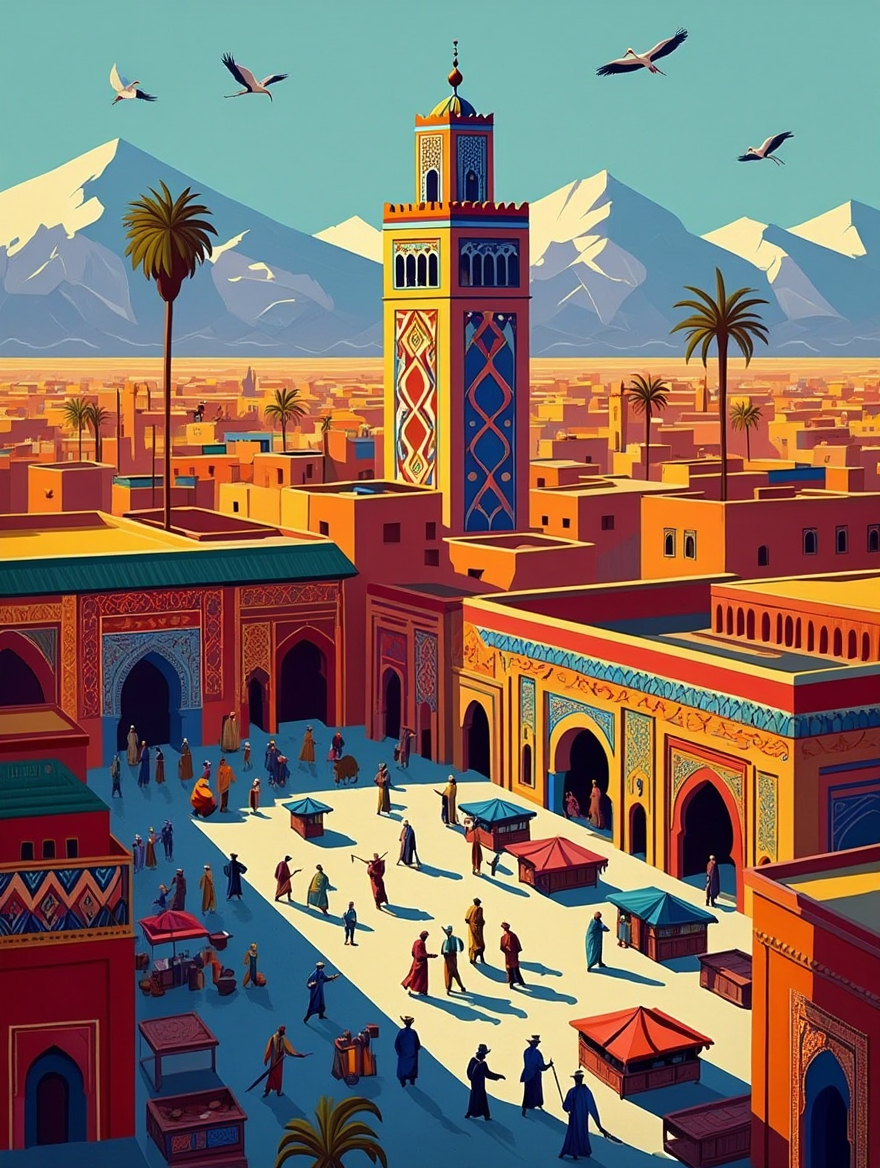
Marrakech is a city of drama and detail. Within its ochre medina walls, life spills out in every direction—musicians, storytellers, spice traders, and artisans all converge in Jemaa el-Fnaa, a UNESCO-listed square of sound and spectacle. Discover hidden riads behind carved doors, visit the Bahia Palace, wander the Majorelle Gardens, and get blissfully lost in the labyrinthine souks. At sunset, the city glows amber; at night, it hums with lantern-lit mystique.
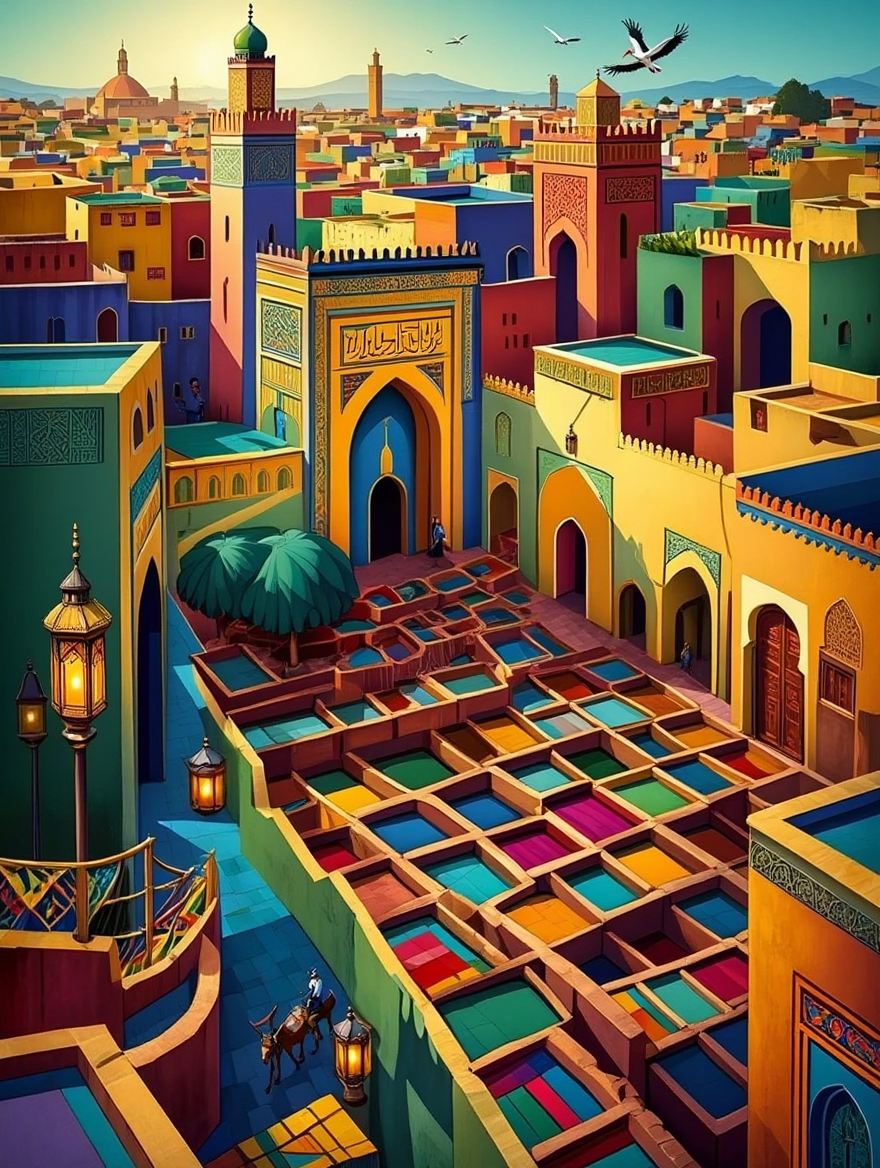
Fez is the intellectual and spiritual heart of Morocco—a city preserved in time. Its medina (Fes el-Bali) is the oldest in the world, a living museum of ceramicists, tanners, and theologians. Visit the Al-Qarawiyyin University, the oldest operating university globally, explore the Chouara Tannery from above, and absorb the sacred atmosphere of its madrasahs. Fez isn’t easy—it’s labyrinthine and layered—but it is deeply rewarding for the thoughtful traveler.
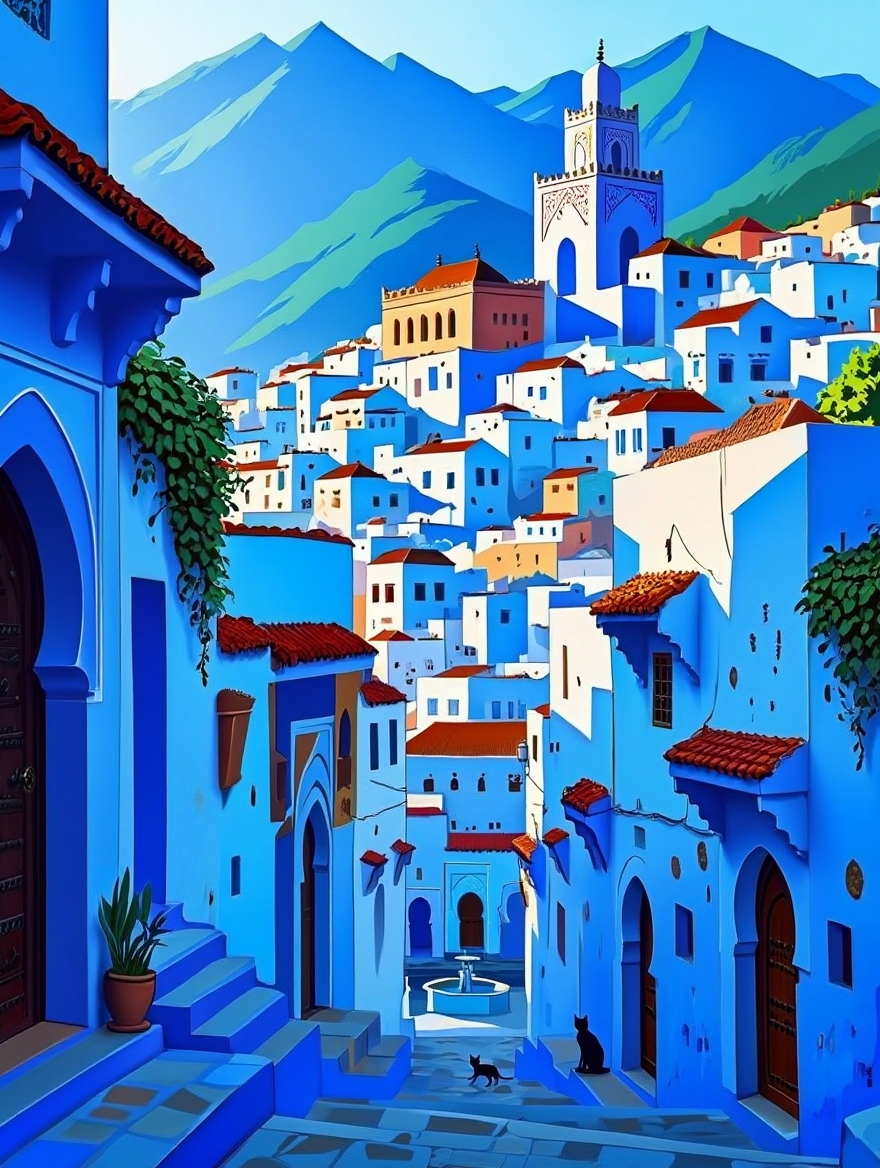
Tucked into the Rif Mountains, Chefchaouen is pure visual poetry. Its cobalt-blue buildings, artisan shops, and cascading stairs offer a calm counterpoint to Morocco’s bigger cities. Come for the aesthetics, stay for the mountain air, laid-back rhythm, and warm, reflective conversations with locals sipping tea beside sun-drenched walls.
To stand atop the Erg Chebbi dunes at sunset is to understand stillness. Near Merzouga, travelers embark on camel treks to desert camps where silence reigns and stars blanket the sky. The Saharan night is both timeless and unforgettable—enhanced by Berber drumming around a fire and the vastness of sand beneath your feet.
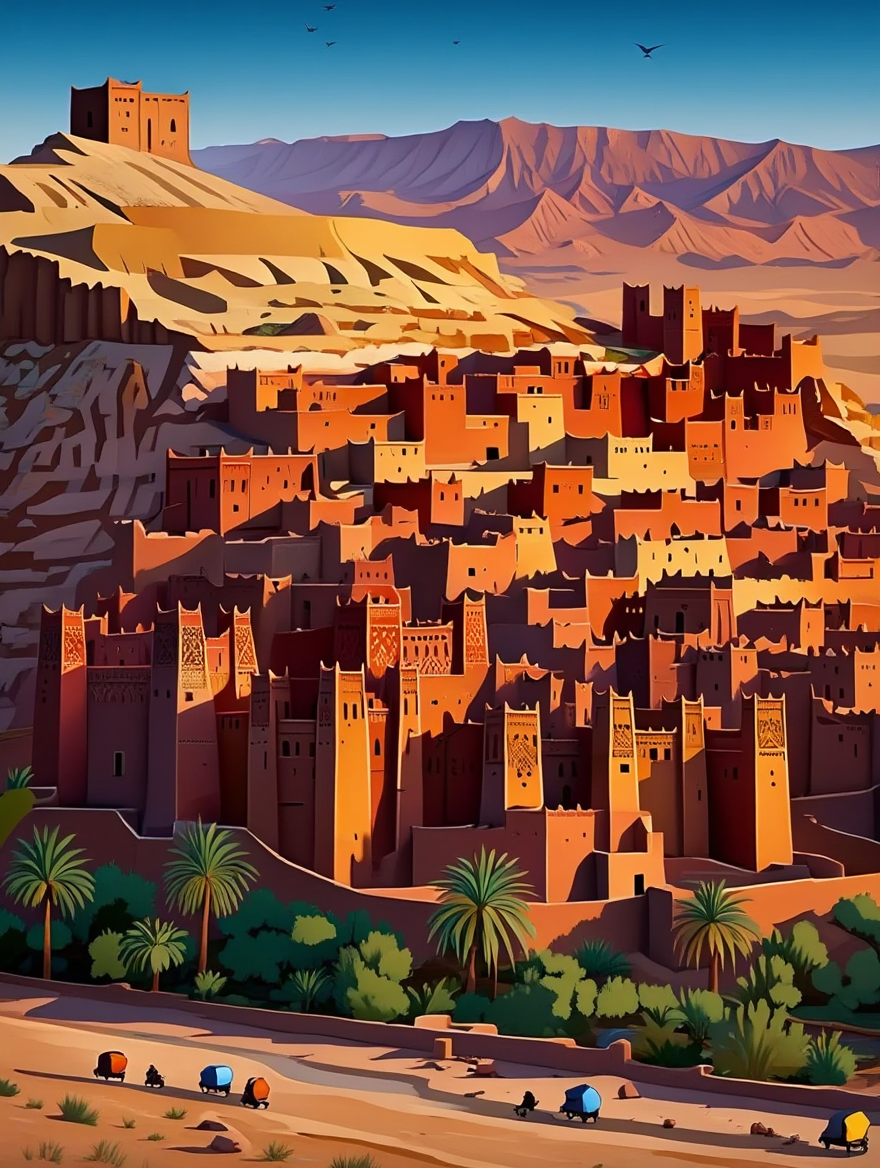
Stretching across the spine of Morocco, the High Atlas and Middle Atlas offer refuge and revelation. In Imlil, the trail to Mount Toubkal begins, while the Aït Bouguemez (Happy Valley) hides quiet villages, walnut groves, and ancient granaries. Hike, bike, or simply listen to the wind thread through stone kasbahs. Stay in eco-lodges and experience Berber hospitality, rooted in rhythm, humility, and landscape.
On the Atlantic coast, Essaouira sways to a slower beat. Whitewashed houses, blue doors, and sea-spray scents create a Mediterranean-meets-Maghreb mood. Known for its windsurfing, art scene, and fresh seafood, the city is a haven for creatives and wanderers. Explore the historic port, browse souks less aggressive than those of Marrakech, and watch dervish waves crash against ancient ramparts.
Casablanca, Morocco’s commercial capital, blends art deco architecture with contemporary buzz. Visit the Hassan II Mosque, perched dramatically over the Atlantic, one of the largest mosques in the world. In contrast, Rabat, the administrative capital, is calmer, greener, and more graceful—with its kasbah, palm-lined boulevards, and museums offering a glimpse of modern Morocco’s elegance.
Is Morocco safe for tourists?
Yes. Morocco is one of the safest countries in North Africa. Petty theft can occur in crowded markets, but violent crime is rare. Solo female travelers are welcomed but may experience unwanted attention—modest dress and confident demeanor help.
Do I need a visa to visit Morocco?
Citizens of the EU, UK, US, Canada, Australia, and over 60 countries can visit visa-free for up to 90 days. A valid passport with at least six months’ validity is required.
What should I wear?
While Morocco is relatively relaxed, modest clothing is advised—especially in medinas and rural areas. Light, breathable fabrics are best. Swimwear is fine on beaches or in resorts but not appropriate elsewhere.
Is English widely spoken?
In tourist areas, yes. French and Arabic are dominant, so learning key phrases is helpful. Guides and younger Moroccans often speak English.
Can I drink tap water?
Stick to bottled or filtered water, especially outside major cities. Bottled water is widely available and inexpensive.
Is bargaining expected?
Yes. Haggling in markets is part of the culture. Do it respectfully and with humor—it’s a social art form, not a confrontation.
Morocco is a place of layers: of tile and tea, prayer and poetry, earth and memory. It does not reveal itself all at once—but slowly, like the call to prayer at dusk, or the scent of cumin in a clay pot, or the light shifting across the dunes.
With Viewpoint Horizons, you travel not just across Morocco, but into its rhythm—a mosaic of worlds, stories, and textures that remains with you long after the journey ends.

Subscribe to see secret deals prices drop the moment you sign up!