
South Africa is not just a country—it’s a world within a border. At every turn, the landscape shifts: from the windswept cliffs of the Cape Peninsula to the red dust of the Karoo; from the jagged peaks of the Drakensberg to the surf-washed beaches of KwaZulu-Natal. It is a land of contrasts, where raw nature collides with refined culture, and ancient traditions stand beside post-modern aspirations
This is a nation where safari and city coexist, where vineyards stretch into mountainsides and penguins waddle beneath pastel sunsets. But South Africa is also a story—a deep and sometimes painful narrative of struggle and strength, reconciliation and renewal. Its diverse cultures—Zulu, Xhosa, Afrikaner, Indian, Cape Malay, and more—compose a mosaic as intricate as any textile, held together by a vibrant national spirit that is proud, humorous, and resilient.
Visitors find themselves immersed in texture and soul: a lion’s roar in the twilight, a glass of Stellenbosch Chenin Blanc on a vineyard stoop, a gospel song rising in a township church, or the vast silence of a Karoo night. With Viewpoint Horizons as your guide, South Africa is not only seen—it’s felt, remembered, and carried home like a second heartbeat.
South Africa’s major international airports are O.R. Tambo International (JNB) in Johannesburg, Cape Town International (CPT), and King Shaka International (DUR) in Durban. These are connected to direct flights from Europe, the Middle East, and North America. Domestic flights are frequent, fast, and well-priced—operated by carriers such as FlySafair, Airlink, and Lift.
For most travelers, renting a car is the best way to explore—especially along the Garden Route, the Cape Winelands, or Kruger region. Roads are well-maintained, and signage is in English. However, driving is on the left-hand side, and rural areas require cautious night driving. Major cities have Uber, Bolt, and local taxis. Long-distance bus services (e.g., Intercape, Baz Bus) also connect tourist hubs.
South Africa’s seasons are reversed from the northern hemisphere. Summer (November to March) is warm and ideal for beaches and wine tourism in the Cape. Winter (June to August) is cooler and dry—optimal for wildlife safaris and whale watching. Spring (September to October) is lush, with wildflower blooms in the West Coast and Namaqualand, while autumn (April to May) offers golden light, low crowds, and exceptional scenery.
The national currency is the South African rand (ZAR). Credit cards are widely accepted, but carry cash for fuel stations, tips, rural areas, and local markets. ATMs are easily found in cities and airports. Mobile payment apps like SnapScan and Zapper are increasingly used by locals.
South Africa has 11 official languages, with English, Zulu, Xhosa, and Afrikaans being the most widely spoken. English is the primary language of tourism, business, and signage—making travel easy for English speakers. Learning a local greeting like sawubona (hello in Zulu) or molweni (hello in Xhosa) is always appreciated.
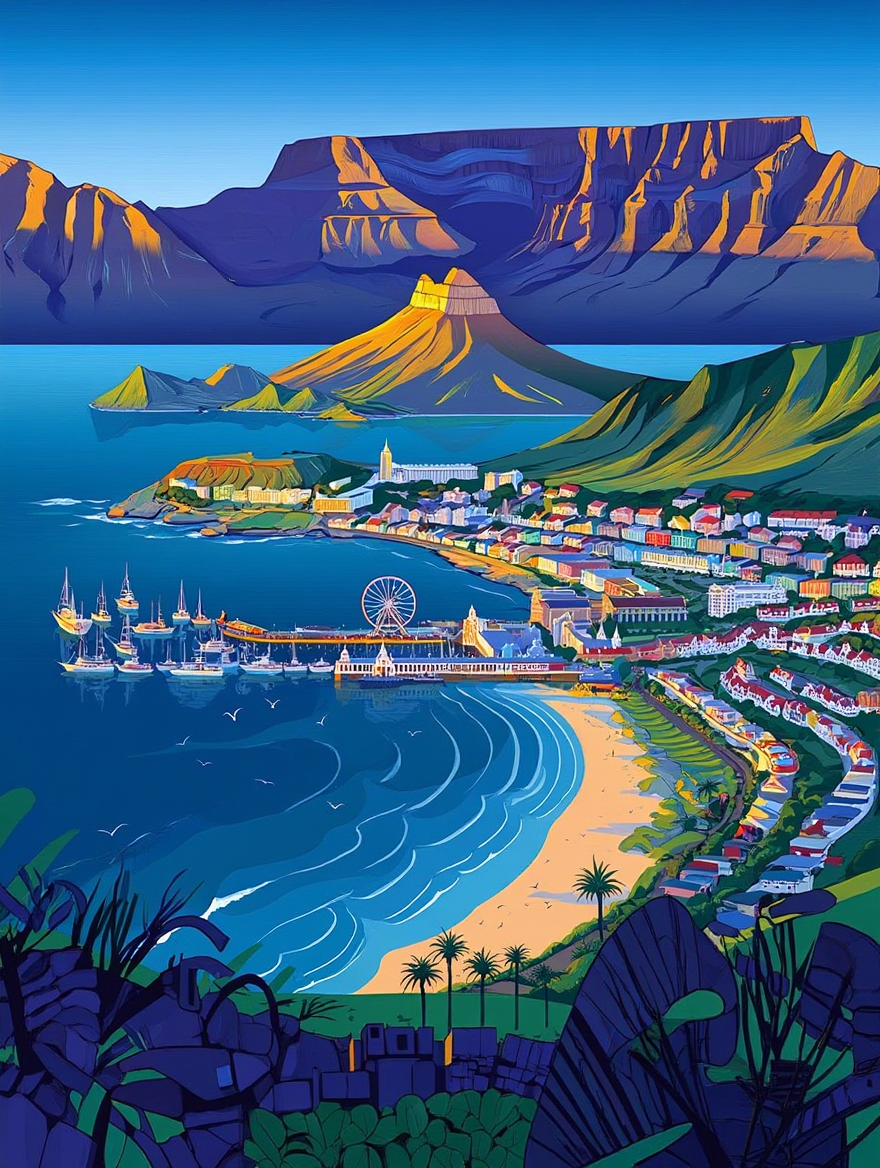
Cape Town is a city of drama and serenity. Framed by Table Mountain, it offers natural spectacle alongside urban sophistication. Take the cable car or hike to the summit for panoramic views, wander through the historic Bo-Kaap district with its colorful houses, or stroll the V&A Waterfront for fine dining, design, and ocean views. Beyond the city, Cape Point, Chapman’s Peak Drive, and Boulders Beach penguins offer a blend of wildlife, coast, and cliffside beauty.
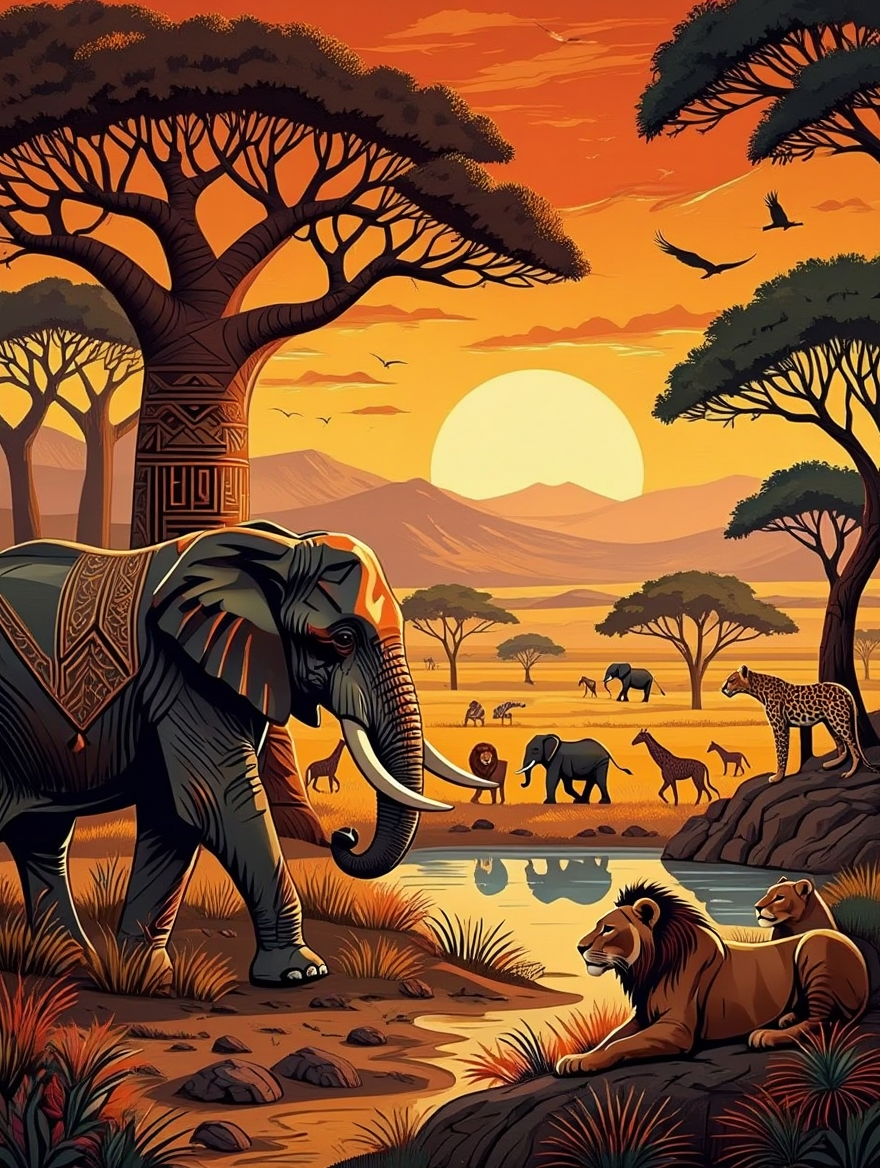
In the northeast lies Kruger National Park, one of the world’s great safari destinations. Covering nearly 20,000 square kilometers, it’s home to the Big Five—lion, leopard, rhino, elephant, and buffalo—as well as cheetahs, hippos, and over 500 bird species. Choose from self-drive routes, luxury private reserves like Sabi Sands, or guided bush walks. Sunrise and sunset game drives are unforgettable, especially under blood-orange skies and the call of distant hyenas.
Stretching from Mossel Bay to Storms River, the Garden Route is a spectacular drive that winds through coastal cliffs, ancient forests, and whale-filled bays. Stop in Knysna for oysters and lagoon views, Plettenberg Bay for beaches and dolphin watching, and Tsitsikamma National Park for suspension bridges and fynbos-covered cliffs. The route offers adventure, romance, and slow, sensory travel.
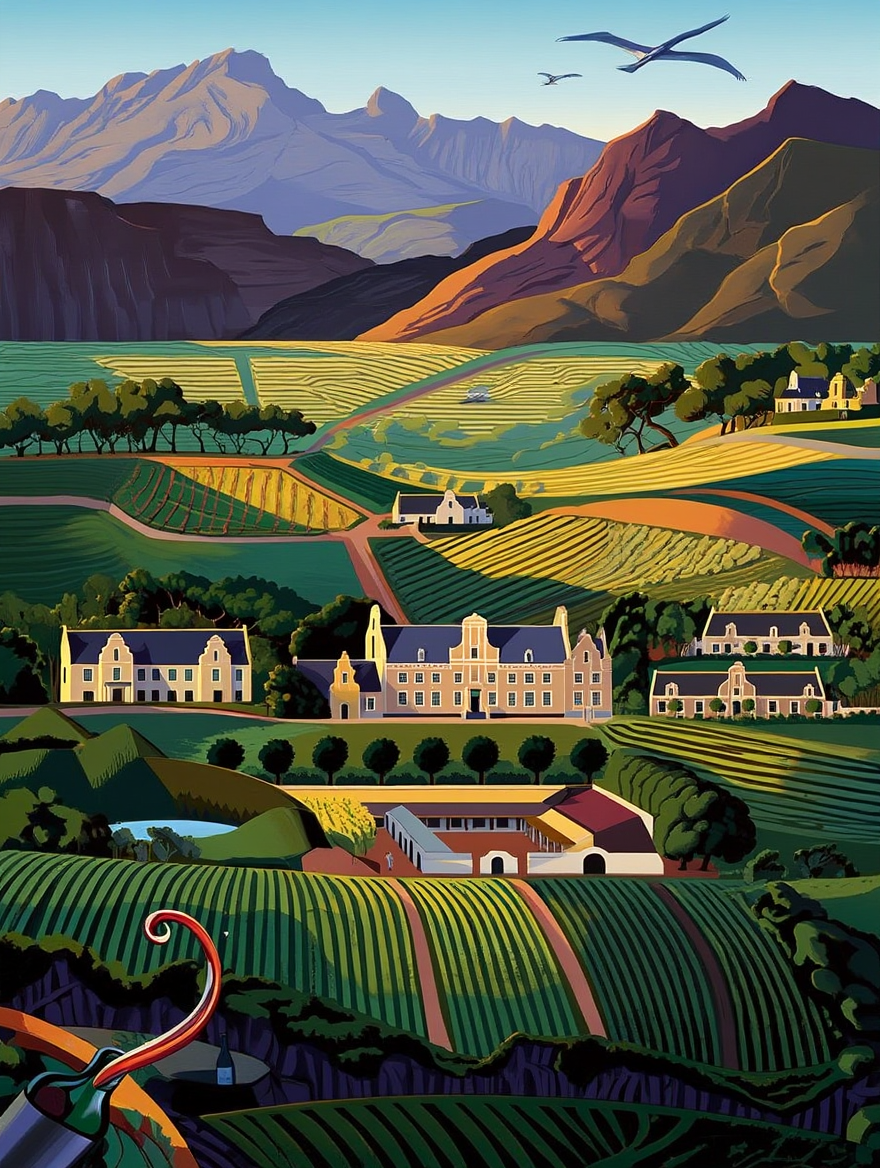
Just an hour from Cape Town, the Cape Winelands are a feast for both eye and palate. Stellenbosch, Franschhoek, and Paarl offer colonial-era charm, verdant valleys, and dozens of award-winning vineyards. Enjoy wine tastings under oak trees, dine at world-class restaurants, and explore art galleries and antique shops in historic farm estates. South African wine, especially Pinotage, Chenin Blanc, and MCC (sparkling wine), has found a global audience—and nowhere does it taste better than here.
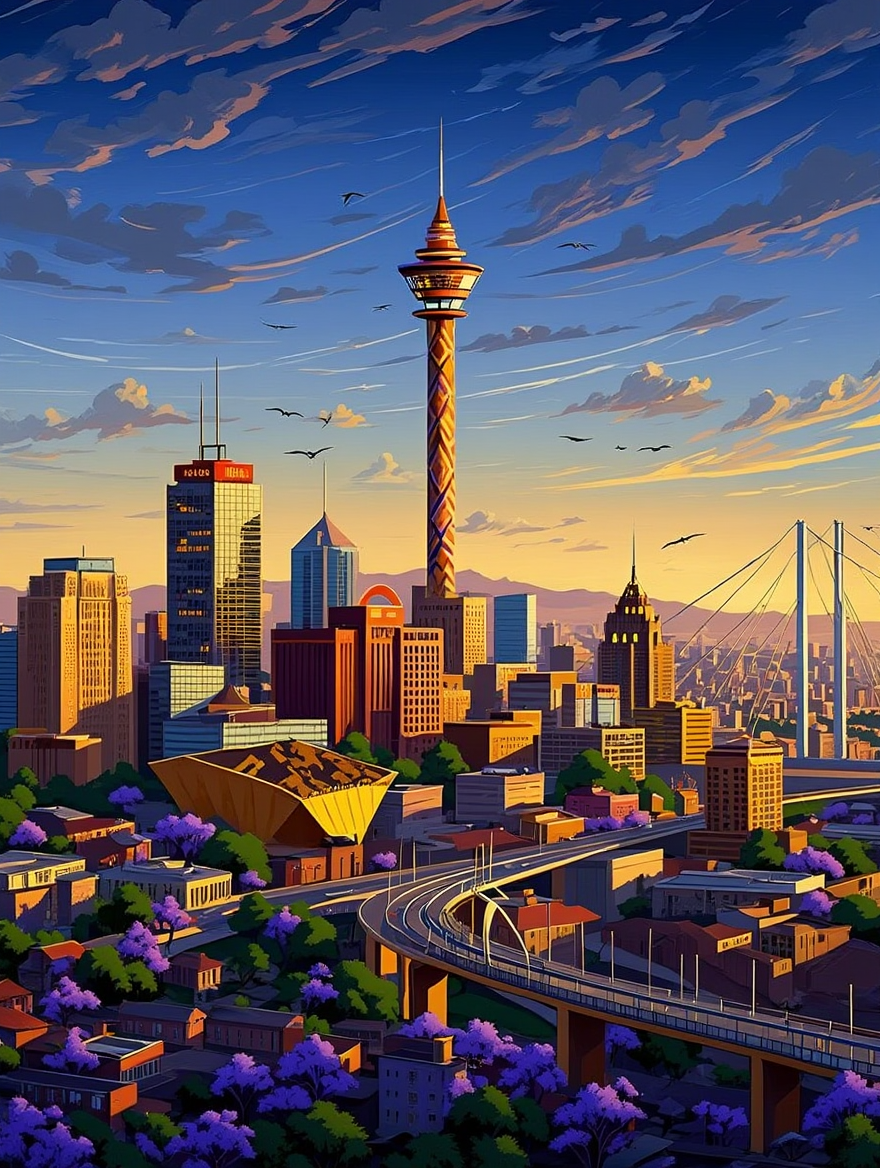
Johannesburg—or Joburg—is South Africa’s economic and cultural engine. Beneath its corporate skyline lies a rich, raw story of transformation. Visit the Apartheid Museum for a sobering yet essential education, explore the Constitution Hill complex, and tour the Soweto township, where Mandela and Desmond Tutu once lived on the same street. Johannesburg is not always easy—but it’s real, thought-provoking, and deeply human.
The Drakensberg Mountains, a UNESCO World Heritage Site, rise like a medieval fortress along the eastern edge of the country. Hike to ancient San rock art, explore Cathedral Peak or Royal Natal National Park, and sleep under skies ablaze with stars. Waterfalls, wildflowers, and vertical cliffs make this region ideal for trekkers, painters, poets, and dreamers alike.
This region blends Zulu tradition, colonial history, and tropical coastline. In iSimangaliso Wetland Park, explore estuaries, mangroves, and coral reefs. Inland, Hluhluwe–Imfolozi Park offers some of Africa’s best rhino sightings. Durban, South Africa’s third city, hums with Indian-African fusion, from curries and markets to surf spots and beach promenades. KwaZulu-Natal is less polished—but rich in identity.
Is South Africa safe for tourists?
Yes—with precautions. Urban crime exists, especially in Johannesburg and Cape Town. Stick to well-traveled areas, avoid displaying valuables, use registered taxis or rideshares, and ask locals or hosts about areas to avoid. Nature reserves and rural regions are generally very safe.
Do I need a visa to visit South Africa?
Citizens of the EU, US, UK, Canada, Australia, and many others can enter visa-free for up to 90 days. Always check current requirements before travel, as regulations may change.
What’s the best way to see wildlife?
Visit national parks or private reserves. Kruger is the best-known, but Addo, Madikwe, Pilanesberg, and Kgalagadi also offer excellent safari experiences with varying levels of infrastructure and exclusivity.
Is tap water safe to drink?
In most urban areas, yes. In rural areas, bottled water is recommended. South Africa maintains high water treatment standards in major cities.
Is English spoken in South Africa?
Yes. English is one of the 11 official languages and is widely spoken—especially in business, tourism, education, and government. You’ll have no language barrier here.
Is South Africa expensive?
It offers excellent value for mid-range and luxury travelers. International currencies go far here, especially for dining, safaris, wine, and accommodation. However, some imported goods and tours can be costly.

Subscribe to see secret deals prices drop the moment you sign up!