
Iceland is a country shaped by fire and carved by ice—where nature asserts itself in bold, uncompromising strokes. Here, you’ll find volcanoes still steaming from their last eruption, glaciers crawling slowly across the highlands, and waterfalls plunging with raw, uninterrupted force into ancient gorges. There is a kind of purity in Iceland’s untamed wilderness that makes it feel like the last edge of the world—a remote island on the cusp of the Arctic, where silence is broken only by wind, birdsong, or the sudden roar of a geyser.
Travelers come to Iceland seeking beauty, but they find something deeper: a kind of spiritual encounter with nature at its most elemental. The midnight sun casts a surreal light over moss-covered lava fields in summer, while in winter, long nights are illuminated by ribbons of aurora borealis dancing overhead. Even Reykjavik, the country’s modest capital, pulses with life and creativity, offering a contrast to the solitude of Iceland’s open landscapes.
Iceland’s uniqueness lies in its contrasts. This is a country where you can bathe in geothermal hot springs in the shadow of snow-dusted peaks, where modernity meets mythology, and where ancient sagas still echo through windswept fjords. Whether you’re hiking across black-sand beaches, driving through glacier valleys, or simply standing still to breathe in the crisp northern air, Iceland invites you to feel—not just to see.
Whether you’re seeking solitude or spectacle, Iceland offers both in equal measure. It’s a land where nature rules with quiet authority and every journey feels like an expedition into the heart of the earth. With Viewpoint Horizons as your guide, Iceland becomes not just a destination, but an unforgettable chapter in your story of exploration.
Most international travelers arrive via Keflavík International Airport (KEF), located about 45 minutes from Reykjavik. The airport is well-connected to Europe and North America, with direct flights from cities like London, Paris, New York, Toronto, and Copenhagen. Icelandair and PLAY are the primary Icelandic carriers, offering year-round and seasonal services that make the island surprisingly accessible for such a remote destination.
Once in Iceland, the best way to explore is by car. Renting a vehicle gives you the freedom to navigate the iconic Ring Road, discover secluded villages, and stop for sudden moments of awe—whether it’s a herd of wild horses, a hidden waterfall, or a glacier field rising in the distance. Public buses are limited outside Reykjavik, and while guided tours are available, independent travel offers the most authentic experience.
Iceland’s seasons each bring a unique personality. Summer (June to August) offers endless daylight, lush valleys, and ideal road conditions. Winter (November to March) is magical in a different way, with snow-covered landscapes, northern lights displays, and fewer crowds. Spring and autumn are shoulder seasons—quiet, mystical, and often overlooked, offering both lower prices and dramatic natural transitions.
Iceland’s currency is the Icelandic króna (ISK). Credit and debit cards are accepted nearly everywhere, even in remote locations. ATMs are common in urban areas, but travelers venturing into rural zones should carry a small amount of cash just in case.
Icelandic is the official language—a descendant of Old Norse with little change over centuries. While it may seem daunting to pronounce, most Icelanders speak fluent English and are happy to assist visitors. Learning a few polite words in Icelandic (like takk for thank you) is always appreciated and adds warmth to any interaction.
Reykjavik, Iceland’s capital and cultural heart, is a city of subtle contrasts—where colorful houses line icy harbors and glassy design blends with the warmth of small-town charm. From the striking silhouette of Hallgrímskirkja church to the mirrored curves of Harpa Concert Hall, architecture mirrors Iceland’s natural drama. Museums, galleries, and bookshops thrive alongside cozy cafés and geothermal pools. Reykjavik is also a gateway to adventure: within an hour, you can stand beside thundering waterfalls or walk between tectonic plates.
No visit is complete without a journey through the Golden Circle, where three geological wonders converge. In Þingvellir National Park, walk along the Mid-Atlantic Rift and stand where Iceland’s parliament was born over a thousand years ago. At Geysir, steaming vents erupt into sky-high columns, while nearby Gullfoss thunders into a canyon in a symphony of mist and light. This route is more than photogenic—it’s elemental, capturing the essence of Iceland’s ever-changing terrain.
Driving along Iceland’s south coast is like turning the pages of an epic poem. Skógafoss and Seljalandsfoss waterfalls fall from cliffs like something out of legend, while the black sands of Reynisfjara Beach are littered with basalt columns and sculpted by Atlantic surf. Further east, Vatnajökull National Park reveals Europe’s largest glacier, its frozen tongues creeping into valleys and calving icebergs into lagoons like Jökulsárlón—where blue ice drifts under silent skies.
Iceland’s geothermal energy doesn’t just power its cities—it nourishes its people. Soaking in a hot spring under snowflakes or sunlight is an Icelandic ritual that visitors quickly adopt. The Blue Lagoon, near Keflavík, is world-famous, but lesser-known gems like the Secret Lagoon in Flúðir or Mývatn Nature Baths in the north offer more intimacy and authenticity. These waters soothe not just the body but the spirit.
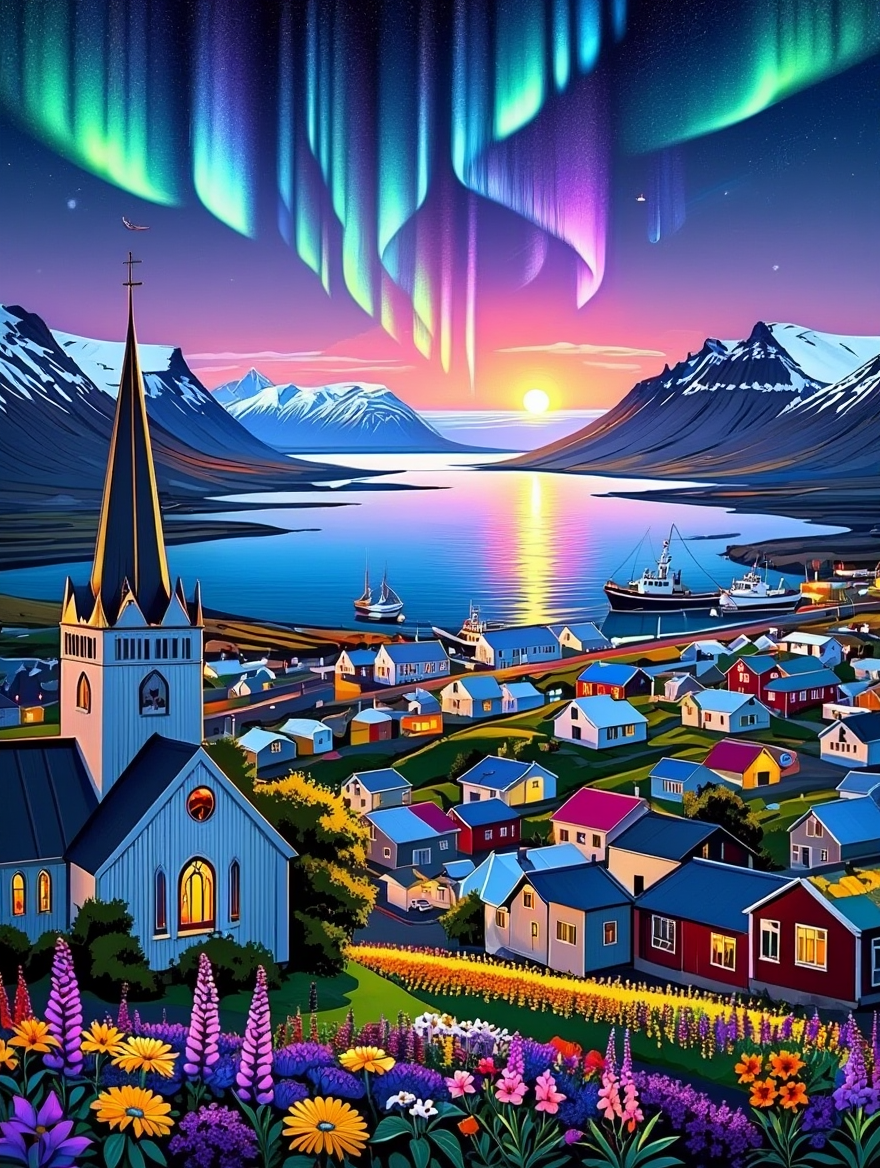
From September to April, Iceland becomes one of the world’s best stages for the aurora borealis. Far from artificial light, the northern lights emerge in rippling waves of green, purple, and white. There’s something ancient and humbling about standing under a sky that moves and glows, as if nature itself were telling a story. While sightings aren’t guaranteed, the anticipation adds to the thrill of winter travel.
Accessible primarily in summer by 4×4, the Icelandic Highlands are vast, volcanic, and breathtaking. This is the Iceland of solitude—lava deserts stretching to the horizon, rhyolite mountains painted in surreal hues, and steaming fumaroles rising from the earth. Landmannalaugar and Askja are among the highlights, offering hikes that feel like traversing another planet. Here, silence reigns, broken only by footsteps on volcanic rock.
Is Iceland safe for tourists?
Yes. Iceland consistently ranks among the safest countries in the world. Crime is extremely low, and nature-related risks are manageable with basic awareness and preparation.
Do I need a visa to visit Iceland?
Travelers from the EU, Schengen countries, the UK, US, Canada, Australia, and many others do not need a visa for stays under 90 days. Always check current requirements before your trip.
What are driving conditions like in Iceland?
Driving in Iceland is safe and enjoyable, especially in summer. Winter travel requires caution due to snow and ice. Always check road.is for real-time updates, and consider renting a 4×4 for rural or Highland routes.
Is the tap water safe to drink?
Absolutely. Icelandic tap water is among the purest in the world, sourced from natural springs and glaciers. There’s no need to buy bottled water.
When is the best time to see the northern lights?
The best months are September to April, with peak visibility during the darkest winter nights. Cold, clear evenings away from city lights provide the ideal conditions.
Is Iceland expensive?
Yes, Iceland is one of the more expensive destinations in Europe. However, smart planning—like cooking your own meals, visiting free natural sights, and traveling off-season—can help manage costs without sacrificing experience.


Subscribe to see secret deals prices drop the moment you sign up!