
Greece is a country where myth meets modernity, where the ruins of ancient temples stand above turquoise seas, and where sun-drenched islands live side by side with centuries-old monasteries and neoclassical cities. From the marble columns of Athens to the whitewashed houses of Santorini, Greece is a place of powerful stories, vivid landscapes, and warm, open-hearted culture.
Whether you’re tracing the paths of philosophers, island-hopping through the Aegean, or tasting olive oil in a mountain village, Greece offers an experience that blends history, hospitality, and timeless beauty. Its diverse geography—from mountains and forests to islands and beaches—makes it ideal for every kind of traveler, from cultural explorers to relaxed sun-seekers.
Greece is easily accessible via major international and regional airports:
Athens International Airport (ATH) – Ideal for mainland Greece and historical sites.
Thessaloniki Airport (SKG) – Best for northern Greece and Chalkidiki.
Heraklion (HER), Santorini (JTR), and Mykonos (JMK) – Direct access to popular islands.
Ferries from Italy and neighboring countries also provide maritime entry points to Patras, Corfu, and Igoumenitsa.
Domestic flights connect Athens with most islands and large cities.
Ferries are widely used for inter-island travel in the Cyclades, Dodecanese, Ionian, and Aegean seas.
Buses (KTEL) are reliable for mainland routes.
Car rentals are recommended for exploring the Peloponnese, Crete, and northern regions.
May to June and September to October offer the best weather with fewer crowds.
July and August are peak season—ideal for beach holidays but more crowded and expensive.
Winter (November to March) is low season, quieter and more affordable, especially in cities and rural areas.
Greece uses the euro (EUR). Credit cards are widely accepted in cities, but small villages and islands often prefer cash.
The official language is Greek, but English is widely spoken in tourist areas.
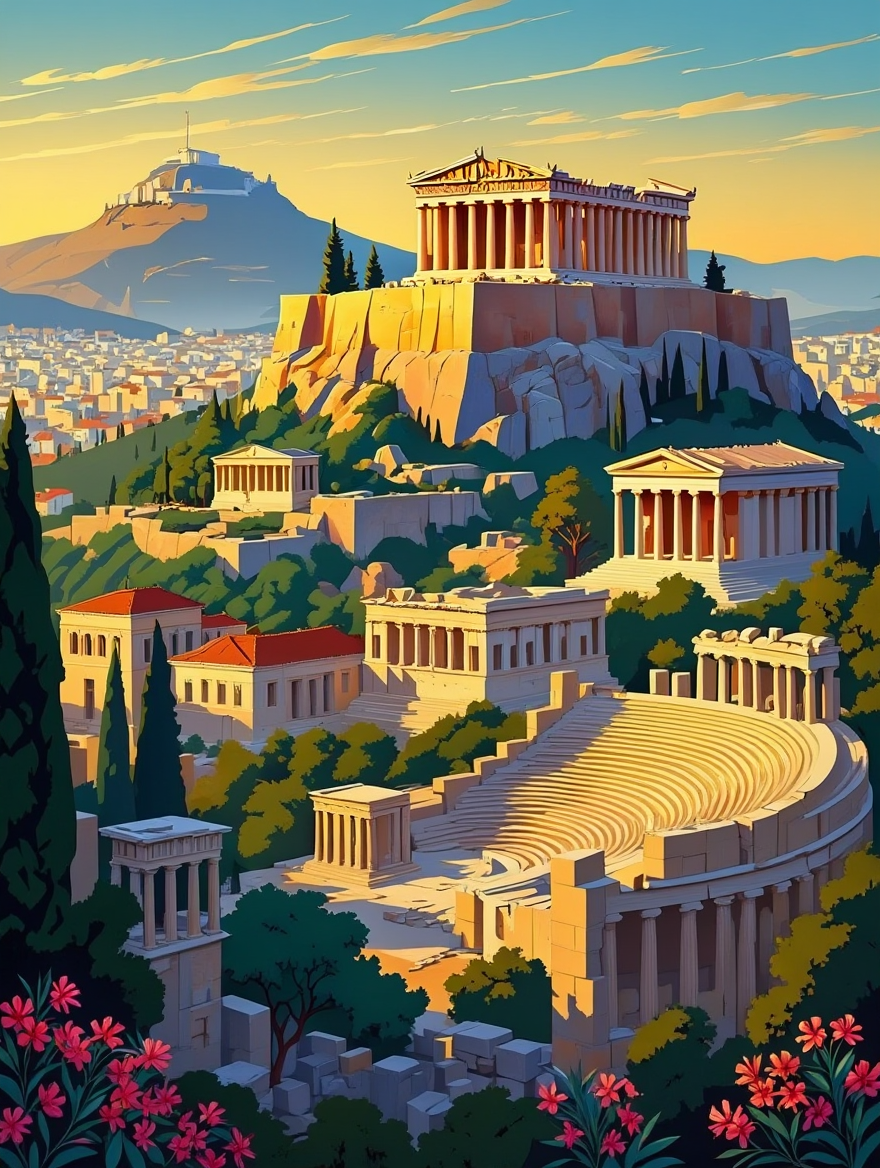
Athens is the cradle of Western civilization. The Acropolis, with its iconic Parthenon, towers above the city. Below, the Plaka neighborhood charms with cobbled streets, neoclassical houses, and lively tavernas. Museums like the Acropolis Museum and National Archaeological Museum offer world-class collections that bring ancient history to life.
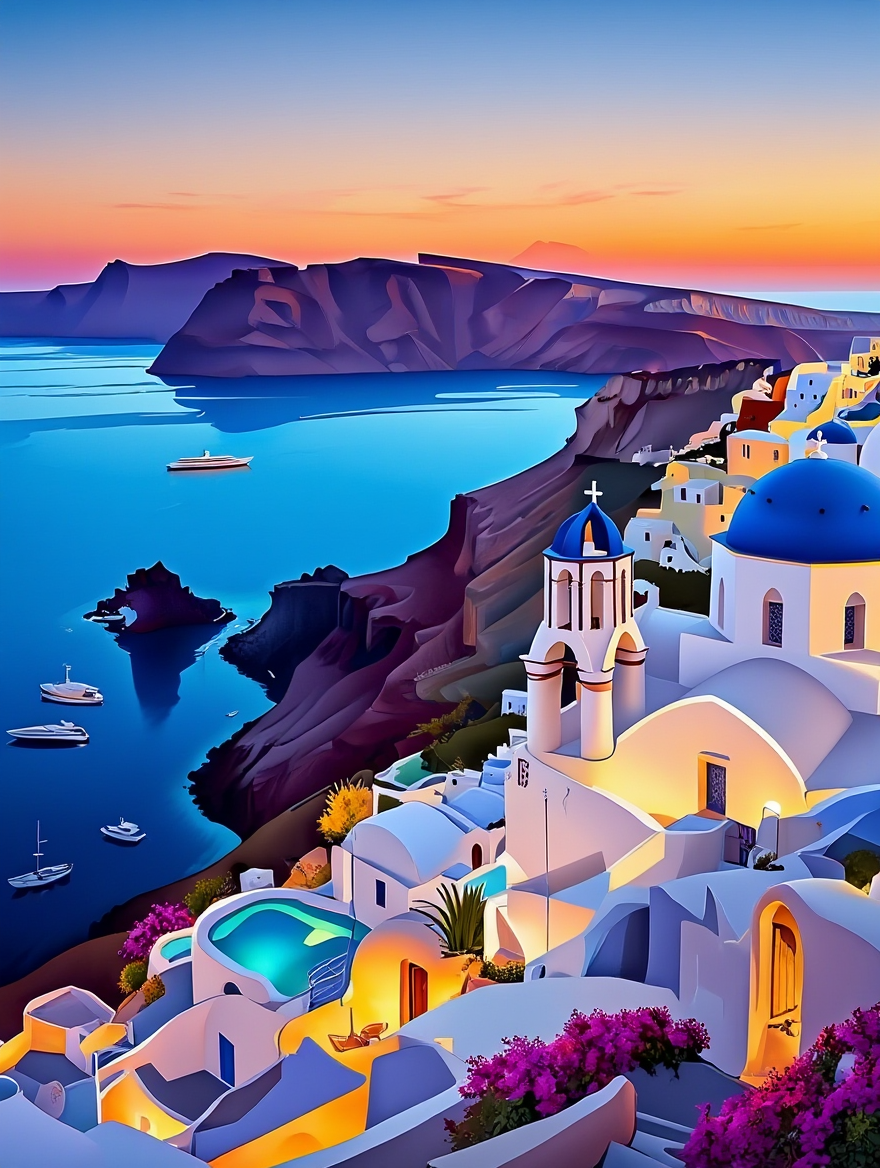
Greece has over 200 inhabited islands, each with its own character. Santorini stuns with its volcanic cliffs and sunsets. Mykonos blends traditional charm with luxury nightlife. Naxos, Paros, and Milos offer quieter escapes with rich history and pristine beaches. The Ionian Islands—like Corfu and Kefalonia—boast green landscapes and Venetian heritage, while Crete offers a world of its own.
In central Greece, Meteora is a UNESCO World Heritage Site where monasteries perch atop towering rock pillars. Accessible by foot or road, the views and spiritual atmosphere are unforgettable. Nearby towns like Kalambaka and Kastraki are ideal for exploring the region.
Delphi, once considered the center of the world, is nestled on Mount Parnassus and offers both archaeological and natural beauty.
Olympia, the birthplace of the Olympic Games, features extensive ruins and a rich museum.
Epidaurus and its ancient theater still host performances in summer.
Greek cuisine is based on fresh, local ingredients—olive oil, herbs, seafood, cheeses, and meats. Sample:
Moussaka, souvlaki, and dolmades
Fresh grilled fish, octopus, and calamari
Baklava, loukoumades, and galaktoboureko for dessert
Local wines, retsina, and ouzo as regional favorites
Meals are meant to be shared slowly, often outdoors, and always with conversation.
Is Greece safe for tourists?
Yes. Greece is one of the safest countries in Europe, with low crime rates and a strong culture of hospitality.
Do I need a visa to enter Greece?
Greece is in the Schengen Area. EU citizens and travelers from many countries including the US, UK, Canada, and Australia can stay visa-free for up to 90 days.
What is the best way to visit multiple islands?
Use a combination of ferries and domestic flights. The Cyclades are well-connected by sea; for longer distances, flights are faster.
Is tipping expected?
Tipping is not mandatory, but a 5–10% tip is appreciated in restaurants and cafes.
Is the tap water safe to drink?
Tap water is safe in Athens and most mainland cities. On islands, bottled water is often recommended.
Can I drive in Greece with a foreign license?
Yes, but most non-EU travelers need an International Driving Permit (IDP).



Subscribe to see secret deals prices drop the moment you sign up!