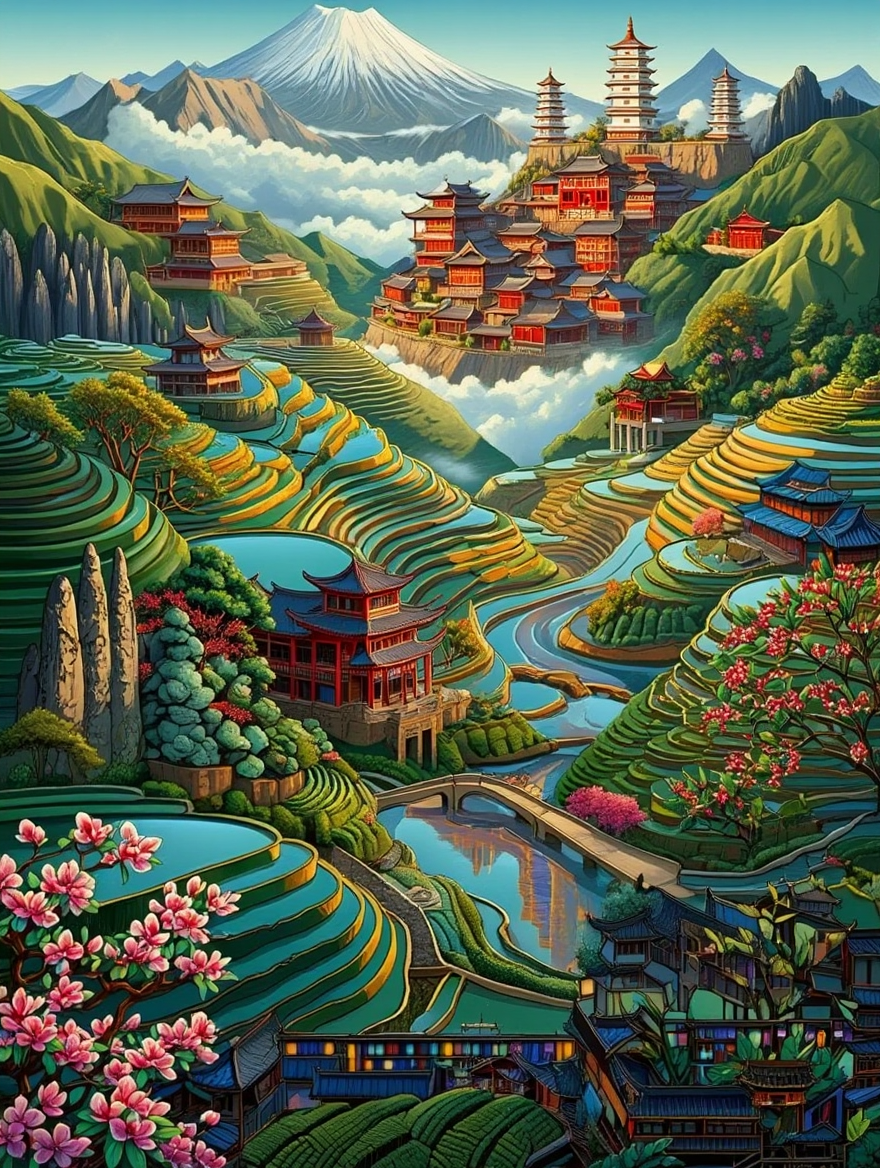

To travel in China is to engage with a world unto itself—vast, intricate, and layered with over five millennia of civilization. It is a country where contradictions coexist with grace: serene Buddhist temples sit beneath soaring skyscrapers; ancient calligraphy brushes past artificial intelligence; stone villages echo with folk songs while megacities pulse with innovation. China does not reveal itself quickly. It is a place that rewards patience, curiosity, and respect.
China is not a destination to conquer in one trip. It is a civilization to return to, to read, to taste, to ponder. It does not rush to impress—it invites you to learn. And in doing so, it gives back something rare in travel today: depth.
Stretching from the icy steppes of Inner Mongolia to the subtropical coasts of the South China Sea, from the Himalayas to the Gobi Desert, China’s geography is as immense as its cultural depth. Travelers encounter imperial legacies in the Forbidden City, Daoist wisdom in Wudang’s misty peaks, and silk-robed traditions alive in Hangzhou’s tea fields. Yet this same country propels high-speed trains at 350 km/h, leads global tech revolutions, and glows with urban dynamism in Shanghai and Shenzhen.
China is not a destination to skim. It is a country to absorb—through rituals, flavors, landscapes, and long conversations. With Viewpoint Horizons as your guide, the Middle Kingdom becomes more than a place on the map. It becomes a layered, living narrative—written in stone, bamboo, neon, and memory.
China’s primary international hubs include Beijing Capital International Airport (PEK), Shanghai Pudong (PVG), Guangzhou Baiyun (CAN), and Hong Kong International (HKG). These airports serve direct flights from Europe, North America, the Middle East, and Asia. Post-pandemic, flight routes are steadily expanding. Domestic travel within China is well-developed, with hundreds of airports and bullet train connections reaching every region.
Travel within China is efficient, especially thanks to the high-speed rail network (CRH)—the largest and fastest in the world. Trains connect major cities in hours, offering clean, punctual, and scenic journeys. In cities, metros are modern, affordable, and easy to navigate, often with English signage. Taxis, ride-sharing apps like DiDi, and long-distance buses also provide convenient travel options. For rural areas, local drivers and guided transport are often necessary.
China’s seasons vary widely due to its size. Spring (March to May) and autumn (September to November) are ideal across much of the country—offering comfortable weather and rich color palettes. Summer (June to August) is hot and humid, especially in the south, but ideal for Tibet and highland travel. Winter (December to February) brings snow to the north, festive traditions during Chinese New Year, and off-season quiet in many regions.
China uses the Renminbi (RMB), with the yuan (¥) as its primary unit. Cash is accepted, but mobile payment via WeChat Pay and Alipay dominates daily transactions—even at street stalls. Foreign cards are not always accepted, so setting up mobile wallets or carrying cash is essential. Major banks and hotels offer currency exchange services.
Mandarin Chinese (Putonghua) is the official language. Regional dialects (Cantonese, Shanghainese, Hokkien, etc.) remain strong in their respective areas. English is spoken in international hotels, tourist sites, and universities, but less so in rural areas. A translation app or printed phrases can greatly enhance your journey. Politeness and effort in speaking a few words of Chinese are always appreciated.
Beijing is a capital with gravitas. It holds the political center of modern China and the historical heart of imperial dynasties. Walk through Tiananmen Square, then pass under the red eaves of the Forbidden City, where emperors once ruled beneath golden dragons. Climb the steep steps of the Great Wall at Mutianyu or Jinshanling, feeling centuries beneath your feet. Yet Beijing is not frozen in time—798 Art District, fusion restaurants, and modern architecture tell a story of reinvention.
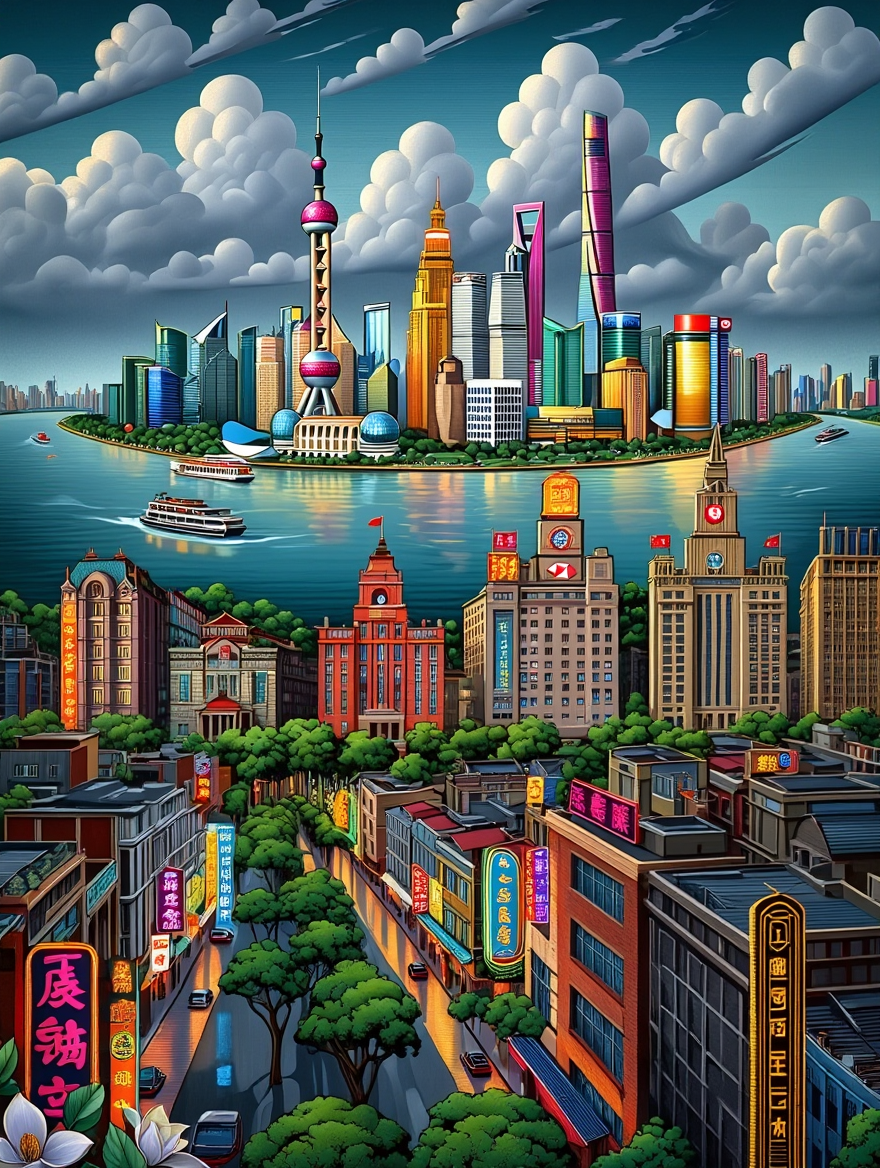
Shanghai dazzles with glass and ambition. The Lujiazui skyline, anchored by the Shanghai Tower and the Oriental Pearl TV Tower, mirrors across the Huangpu River from the colonial elegance of the Bund. French Concession streets drift beneath plane trees, while art museums, rooftop bars, and high-speed commerce pulse through the metropolis. Shanghai is where East meets West with style and certainty.
In Xi’an, history is not a backdrop—it’s the foundation. Once the eastern terminus of the Silk Road, the city still wears its past with pride. The Terracotta Army, thousands of life-sized clay soldiers unearthed near Emperor Qin Shi Huang’s tomb, is one of the world’s greatest archaeological wonders. Cycle atop the ancient city walls, explore Muslim Quarter street food, or delve into early dynastic tombs—Xi’an is where China remembers its roots.
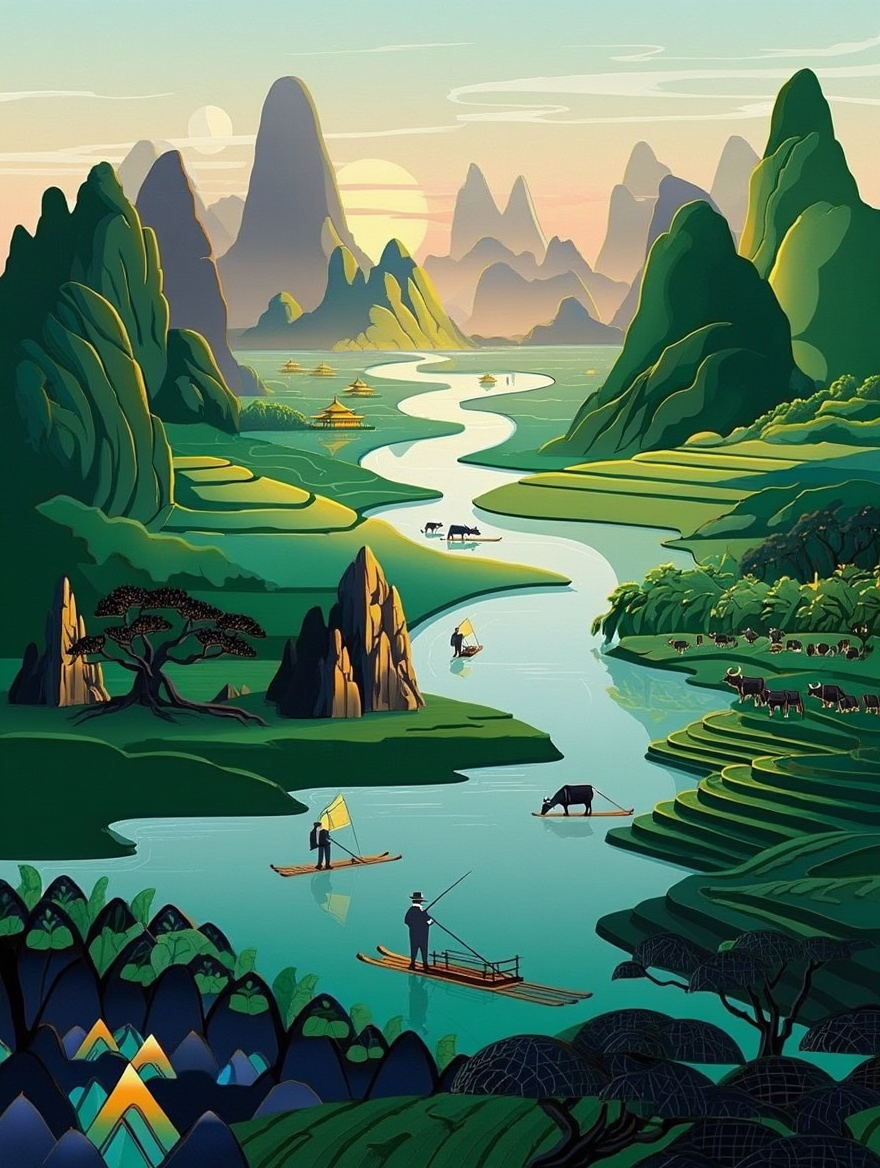
China’s classical landscape painting was born in the limestone peaks of Guilin and Yangshuo. The Li River, flanked by karst formations, winds through rural villages, bamboo groves, and misty cliffs. A boat journey or bamboo raft ride through these waters is profoundly poetic. In Yangshuo, days are best spent cycling through rice fields, visiting local markets, or climbing Moon Hill at sunset.
Chengdu is China’s capital of leisure—and spice. Sip tea in bamboo courtyards, watch locals play mahjong, and taste the fire of Sichuan hotpot. At the Chengdu Research Base, you’ll encounter giant pandas in their native habitat. Nearby, Mount Emei and Leshan’s Giant Buddha offer spiritual respite and UNESCO-protected heritage, while teahouses buzz with storytelling and laughter.
Entering Tibet is like stepping into a different rhythm of life. At nearly 4,000 meters above sea level, Lhasa glows under a high, thin sky. The Potala Palace, once home to the Dalai Lama, overlooks prayer wheels and red-robed monks. Visit Jokhang Temple, meditate beside Yamdrok Lake, and journey toward the Mount Everest Base Camp. Tibet is spiritually rich and logistically complex—travel here should be done with preparation and sensitivity.
In Zhangjiajie, stone spires rise like floating towers—an ethereal landscape that inspired Avatar. Skywalks and glass bridges stretch across canyons, offering surreal views. In contrast, Huangshan (Yellow Mountain) offers pine-covered peaks, ancient stone paths, and mist-swept serenity. Both regions are embodiments of China’s mythological imagination.
Is China safe for travelers?
Yes. China is very safe for tourists, with low crime rates and reliable infrastructure. Exercise normal precautions, especially in crowded areas. Surveillance and public order are strongly enforced.
Do I need a visa to visit China?
Most travelers need a visa before entering China. Apply in advance via a Chinese embassy or consulate. Transit visa exemptions and short-stay options exist for some cities—verify based on your nationality and itinerary.
Can I access the internet freely in China?
The Great Firewall restricts access to Google, Facebook, Instagram, and many Western platforms. Download a reliable VPN before arrival if you wish to use these services. Chinese alternatives (WeChat, Baidu, Weibo) dominate the digital landscape.
Is it difficult to travel without speaking Chinese?
In major cities and tourist areas, English signage is common. In rural or off-the-beaten-path areas, communication can be challenging. Translation apps and patience are very helpful.
Is the food safe to eat?
Yes. Street food, local eateries, and high-end dining are generally safe. Drink bottled or boiled water in most areas. Chinese cuisine varies dramatically by region—be open to discovery.
Can I use my credit card in China?
International cards are accepted in large hotels and upscale shops. Day-to-day transactions are often mobile-only. It’s wise to carry some cash and explore options for WeChat Pay or Alipay using foreign cards (some functionality now exists).



Subscribe to see secret deals prices drop the moment you sign up!