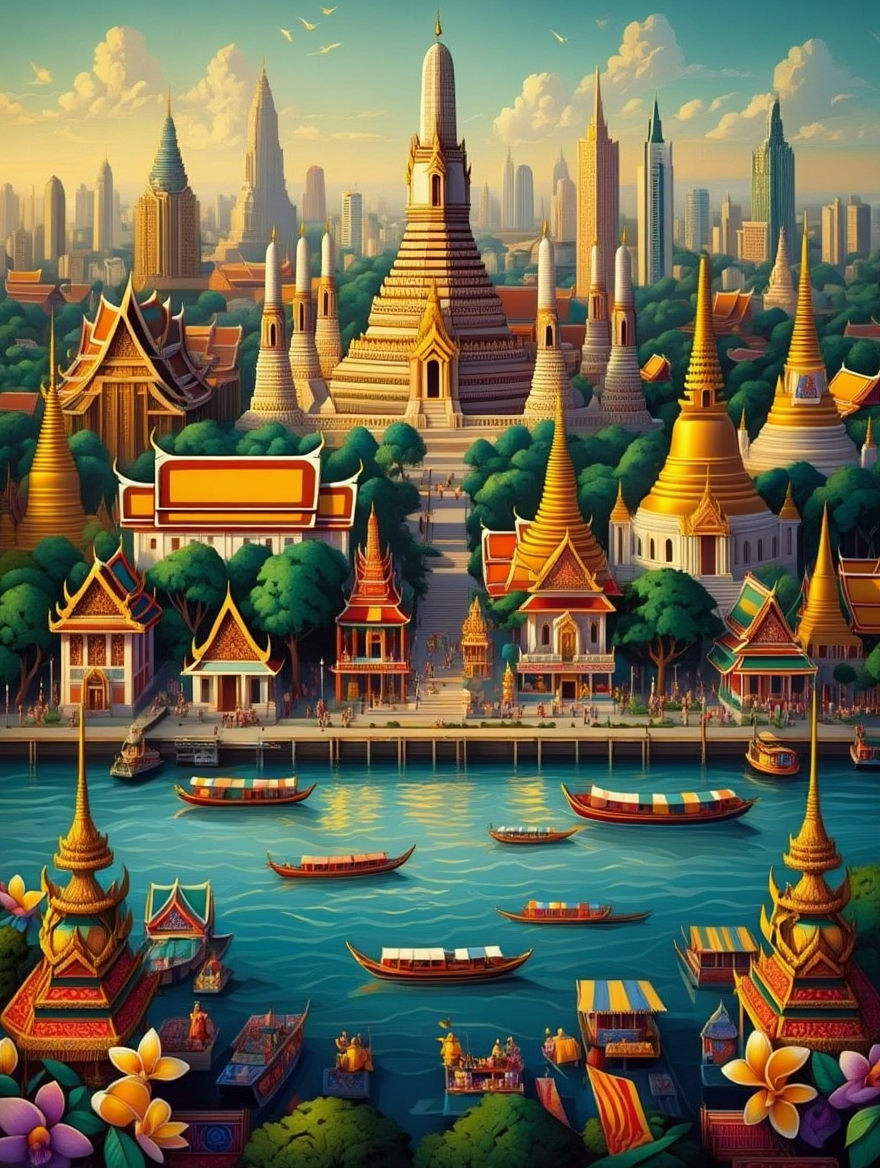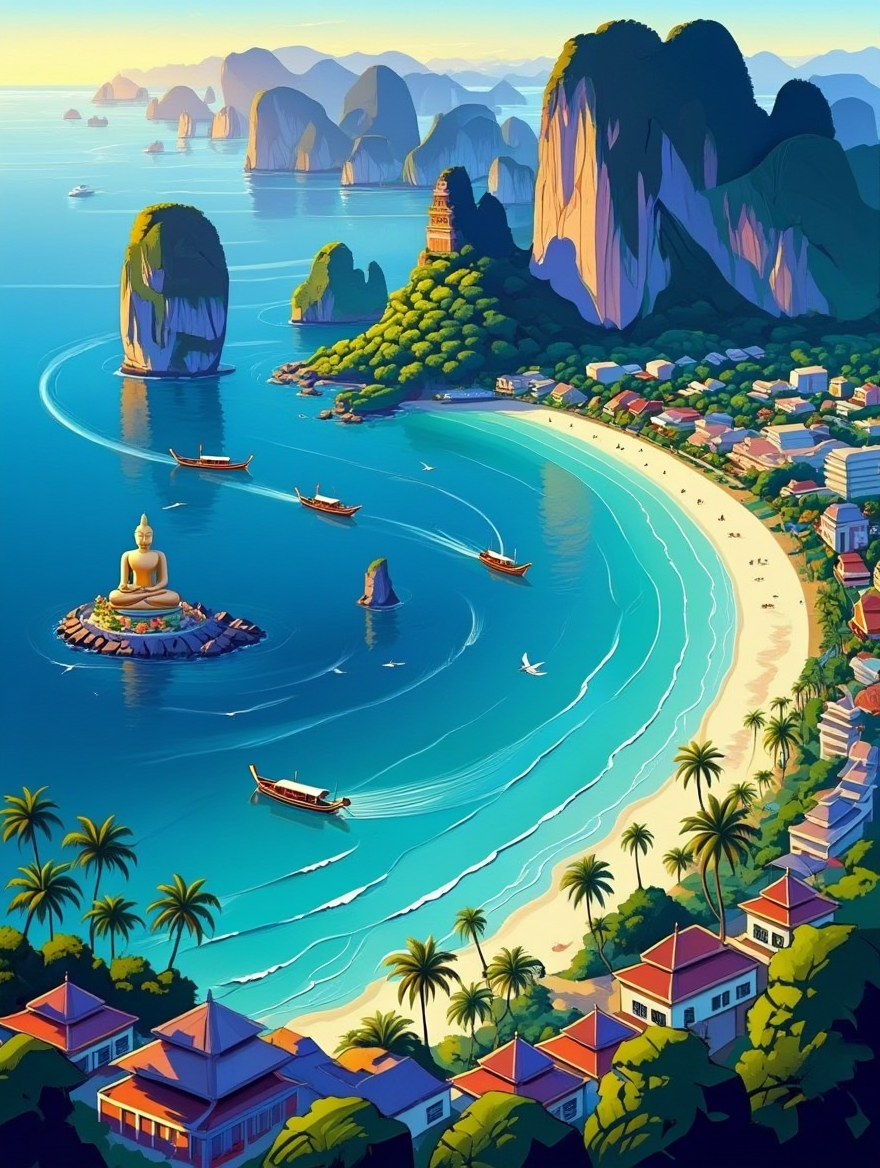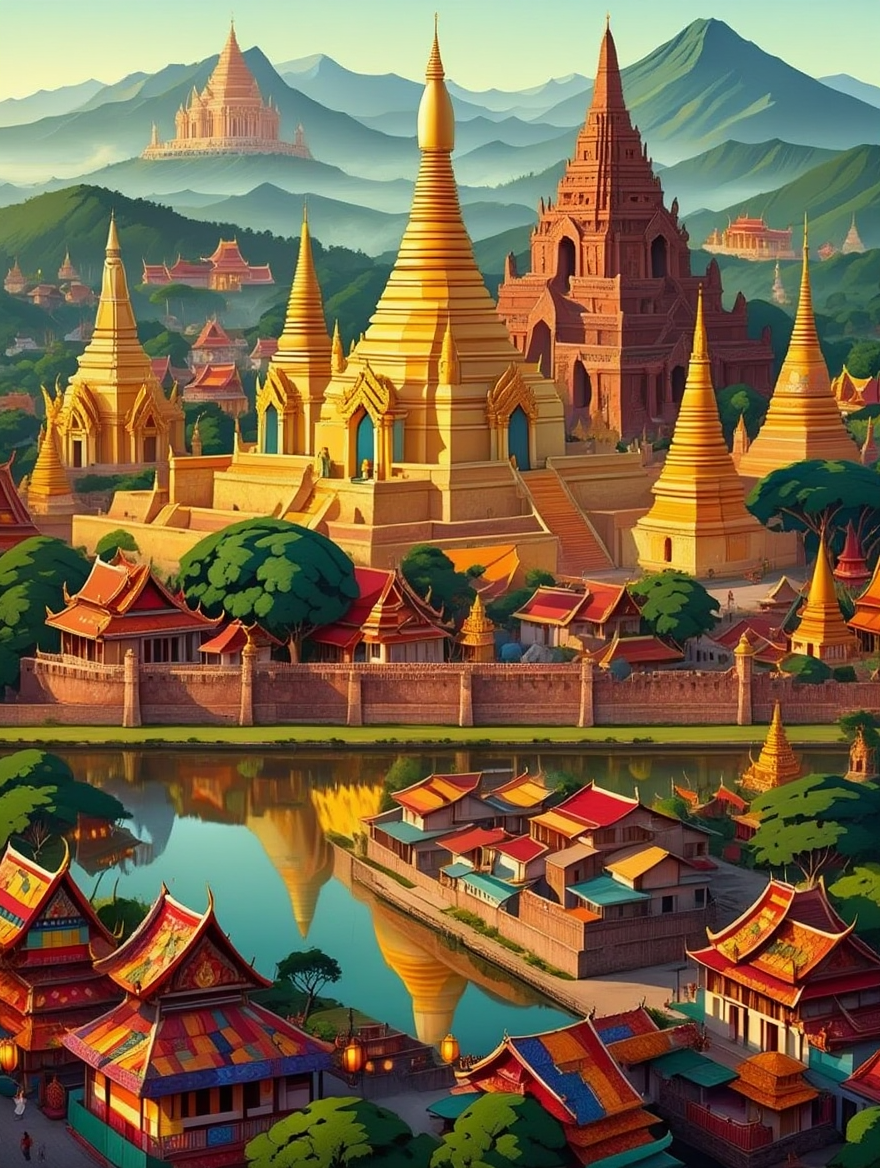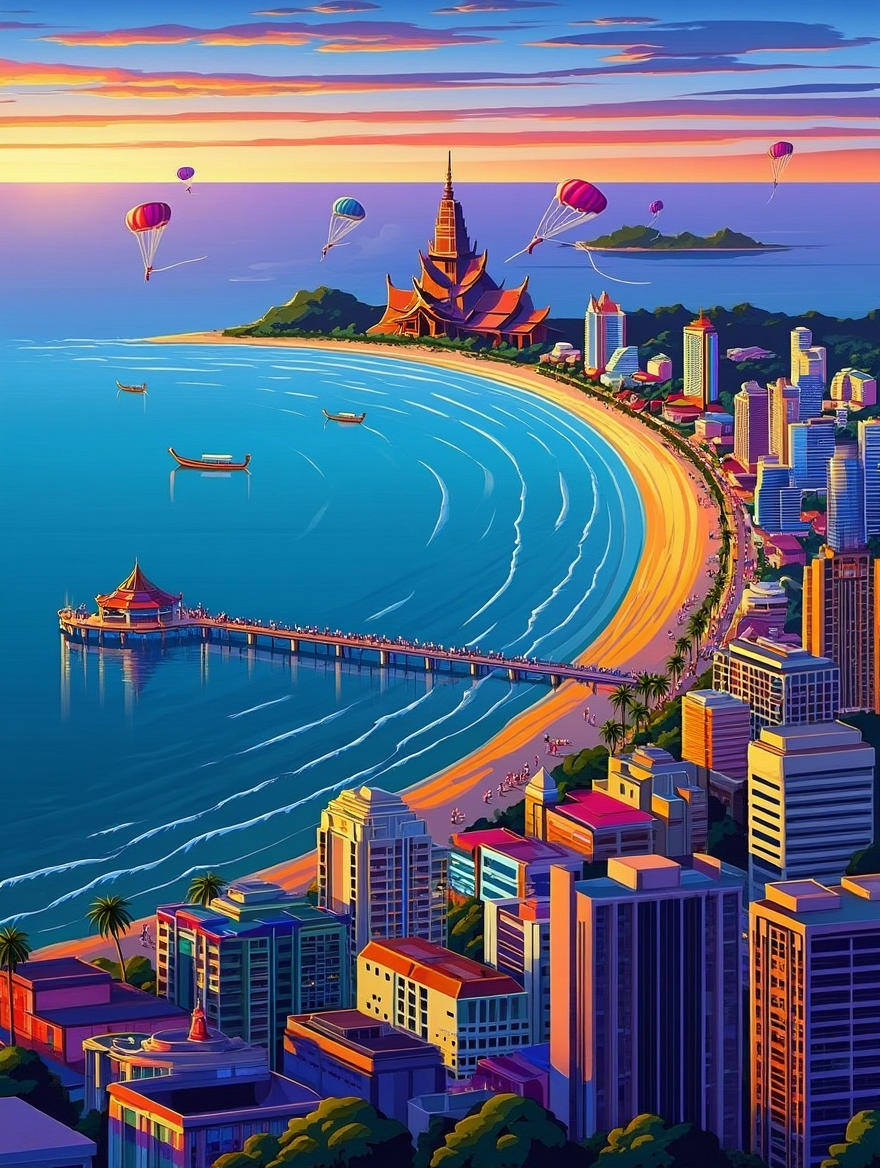

Thailand is more than a beach destination or a culinary paradise—it is a country that breathes rhythm and reverence. From the misty mountains of the north to the turquoise islands of the Andaman Sea, from golden-roofed temples to humming night markets, Thailand offers not just beauty but balance: between ancient and modern, sacred and sensual, chaos and calm.
Here, you’ll wake to monks chanting at dawn and fall asleep to waves on white sand. You’ll pass saffron-robed novices in serene courtyards, then ride tuk-tuks through Bangkok’s kaleidoscopic alleys. Whether you’re sipping coconut water under a palm tree, meditating in the ruins of Ayutthaya, or navigating the floating markets of Amphawa, Thailand does more than welcome—it enfolds you.
And yet, beneath its postcard-perfect exteriors lies something richer: a deeply rooted Buddhist worldview, a quiet resilience, and a cultural grace that permeates daily life. This is a country where smiles mean many things, and where gestures, rituals, and flavors speak louder than words.
With Viewpoint Horizons as your guide, Thailand becomes not just a vacation, but a sensory and spiritual journey—vivid, layered, and profoundly human.
Thailand’s primary international gateways are Suvarnabhumi Airport (BKK) in Bangkok and Phuket International Airport (HKT) in the south. Don Mueang (DMK) handles regional and low-cost carriers. Direct flights connect Thailand to North America, Europe, the Middle East, Australia, and all of Asia. Chiang Mai (CNX) and Krabi (KBV) also offer international routes during peak seasons.
Thailand’s transport network is extensive. Domestic flights are affordable and fast. Trains—particularly the scenic overnight sleepers from Bangkok to Chiang Mai or Nong Khai—offer comfort and culture. Buses and minivans reach nearly every village and town. Within cities, Grab (ride-hailing app), tuk-tuks, and metered taxis are available. Longtail boats and ferries connect islands and riverside communities.
Thailand’s climate has three primary seasons:
Cool season (November–February): Ideal for travel across the country, with dry air and comfortable temperatures.
Hot season (March–May): Best for beach escapes, though inland regions can be very warm.
Rainy season (June–October): Expect tropical showers, especially in the south, though mornings are often sunny and prices lower.
Regional variation matters: the Gulf Coast (e.g., Koh Samui) stays drier when the Andaman Coast (e.g., Phuket, Krabi) is wet, and vice versa.
The national currency is the Thai baht (THB). ATMs are widely available. Credit cards are accepted in hotels and upscale restaurants, though cash is preferred at markets, local eateries, and rural areas. Tipping is appreciated but not expected.
Thai is the national language. English is spoken in most tourist areas, though learning basic Thai greetings—like sawasdee kha/krub (hello) and khop khun kha/krub (thank you)—will earn smiles and respect. Non-verbal communication is highly valued; grace and politeness matter more than fluency.
Bangkok is alive—intense, electric, and full of contradiction. Gold-leafed temples and towering malls, street food carts and rooftop cocktail bars, canal boats and luxury trains all jostle for attention. Visit the Grand Palace, where emerald Buddhas rest beneath mirrored spires, then wander through the sacred calm of Wat Pho, home to the massive reclining Buddha. Ride a boat through the Chao Phraya River, explore the street art of Talat Noi, or lose yourself in the chaos of Chatuchak Market. At night, Bangkok shifts: dine along the riverbanks, sip Thai whisky at speakeasies, or join locals at late-night noodle stalls where the heat lingers on your lips and in the air.
In Thailand’s northern hills, Chiang Mai offers serenity and soul. Encircled by ancient walls and temples, the city balances craftsmanship and spirituality. Join a traditional cooking class, witness alms-giving ceremonies at dawn, or hike to Doi Suthep, a gilded temple perched above the clouds. Further north, Chiang Rai stuns with its White Temple (Wat Rong Khun) and Blue Temple, both surreal and striking. Beyond the cities, hill tribes, hot springs, and ethical elephant sanctuaries provide immersive, ethical encounters with rural Thai life.
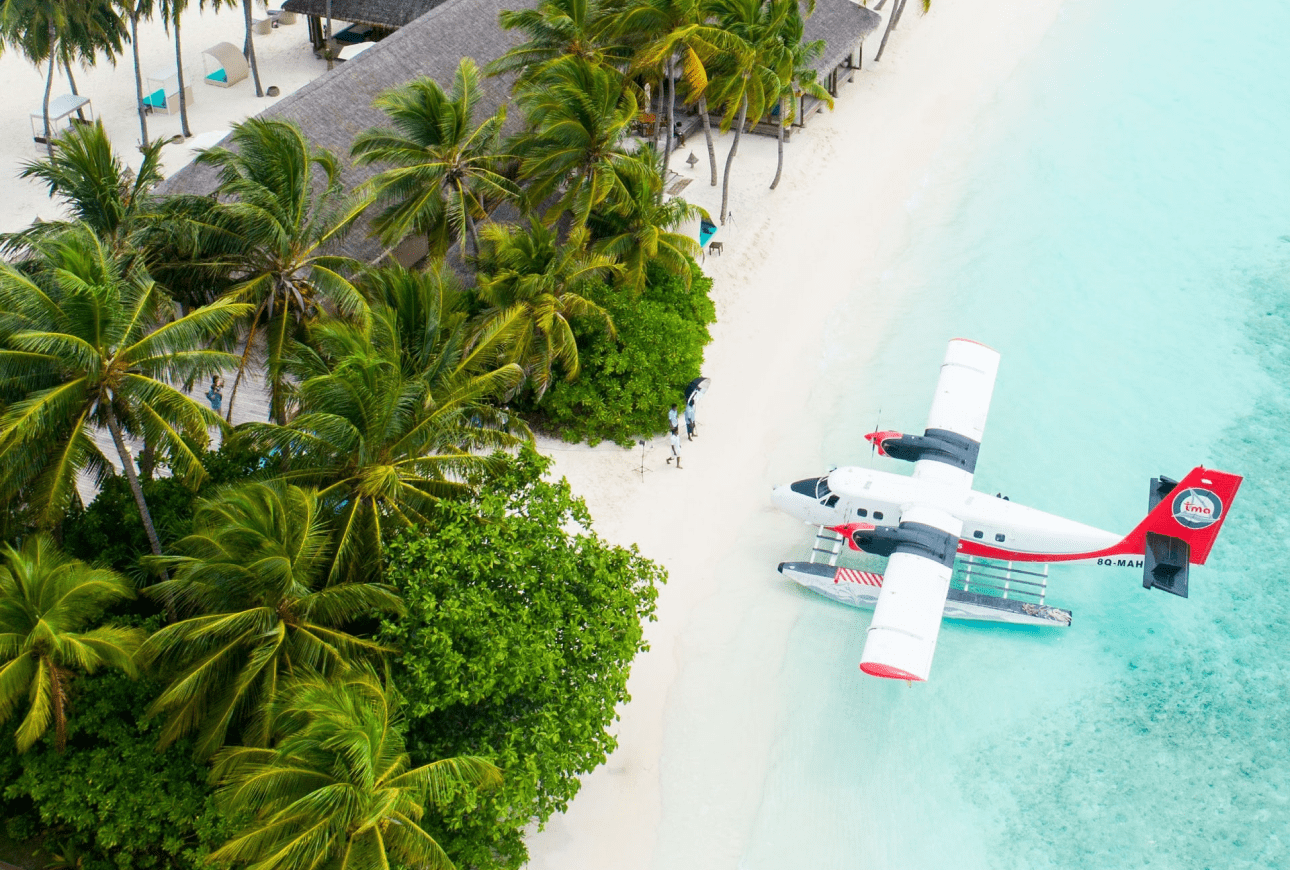
Thailand’s coasts are as diverse as they are stunning. On the Andaman side, Phuket, Krabi, and the Phi Phi Islands boast dramatic cliffs, emerald lagoons, and postcard beaches. Explore hidden bays by kayak, snorkel among coral reefs, or relax in jungle-framed resorts. In the Gulf of Thailand, Koh Samui offers luxury with a laid-back beat, Koh Phangan blends yoga with full moon revelry, and Koh Tao is a diver’s dream. Lesser-known gems like Koh Lipe and Koh Yao Noi promise quieter beauty, untouched sands, and days that dissolve into light.
Step back into Thailand’s royal past in the UNESCO-listed ruins of Ayutthaya and Sukhothai. Bicycle past stone Buddhas wrapped in saffron, lotus ponds reflecting ancient prangs, and crumbling chedis that whisper of fallen kingdoms. These cities, once powerful capitals, now offer quiet grandeur and deep insight into Thailand’s cultural evolution.
In the northeast, Isaan remains largely untouched by mass tourism. It is a land of rice paddies, Khmer temples, and robust regional cuisine. Explore the pre-Angkorian ruins of Phanom Rung, attend village festivals in Ubon Ratchathani, or feast on spicy larb and sticky rice with locals. Isaan offers something rare: a deeper immersion into Thai daily life and rural pride.
Thailand’s spiritual roots run deep. From meditation retreats in Chiang Mai to Muay Thai training in Bangkok, the country offers many ways to engage body and soul. Visit during Songkran (Thai New Year in April) for joyful water fights and temple rituals, or witness Loy Krathong in November, when candlelit offerings float down rivers under full moons. These moments are not performances—they are lived, loved, and shared.
Is Thailand safe for tourists?
Yes. Thailand is one of Asia’s safest and most welcoming destinations. Petty theft can occur in tourist areas, but violent crime is rare. Respect local customs and remain aware of scams targeting tourists.
Do I need a visa to visit Thailand?
Citizens of over 60 countries (including the EU, US, UK, Australia, Canada) can enter visa-free for 30 days, with extensions available. Always confirm the latest entry rules before travel.
Is tap water safe to drink?
No. Drink bottled or filtered water, which is readily available. Avoid ice in rural areas unless from a trusted source.
Is English widely spoken?
In tourist areas, yes. In rural or provincial towns, less so. Hospitality staff often speak English, but a phrasebook or translation app is useful in remote areas.
What is the dress code for temples?
Cover shoulders and knees. Remove shoes before entering. Respect is essential—avoid loud voices, selfies in front of shrines, or pointing feet at Buddha images.
What is the tipping culture in Thailand?
Tipping is not mandatory but appreciated. In restaurants, rounding up the bill or leaving 10% is common. For guides, drivers, and hotel staff, small gratuities are welcomed.


Subscribe to see secret deals prices drop the moment you sign up!